
 Deutsch
 Dansk
Dansk Suomi
Suomi Latviešu
 Lietuvių
 Norsk bokmål
 polski
 Русский
 Svenska
No products in the cart.
Uncategorized
20kW DC Home Charger: 2026 Ultimate Buying Guide
23
Aug
Aug
Why settle for an overnight trickle when you can achieve a full charge before your morning coffee gets cold? Most EV owners are frustrated with the 8-10 hour wait times of standard AC wallboxes. You want speed, efficiency, and professional-grade performance right in your driveway. Integrating a 20kw dc home charger is the elite standard for 2026. It offers three times the effective speed of traditional AC units without the massive industrial footprint. This shift allows you to reduce charging time to under two hours while maintaining total control over your energy usage.
You might worry about battery health or the technical hurdles of high-power DC equipment. We understand the confusion around 3-phase requirements and the 2026 NEC updates. This guide simplifies your hardware choice. We focus on the V2C DENKA 20kW DC Wallbox as the premier solution for rapid home charging. You’ll discover how to future-proof your infrastructure and manage your station via the CHRG Network app. We’ll preview the latest tax credit deadlines and smart load balancing features. Get ready to transform your charging experience with high-performance hardware that delivers immediate results.
Key Takeaways
- Learn how to bypass slow vehicle onboard chargers and slash your charging times to under two hours.
- Discover why the V2C DENKA is the premier compact 20kw dc home charger for private garages in 2026.
- Identify the essential 3-phase electrical requirements and cabling specs needed to support rapid DC hardware.
- Explore how the CHRG Network provides smart remote management to optimize your energy efficiency and prevent downtime.
- Secure a Personalised Charging Offer to simplify your hardware selection and future-proof your home infrastructure.
Why Upgrade to a 20kW DC Home Charger in 2026?
The landscape of electric vehicle ownership has shifted. In 2026, premium EVs frequently feature batteries exceeding 100kWh. Relying on standard AC wallboxes is no longer enough for high-mileage drivers or those with tight schedules. You need professional-grade speed. The 20kw dc home charger has emerged as the definitive “prosumer” choice. It bridges the gap between slow residential charging and industrial petrol station units. Stop planning your life around eight-hour charging windows. It’s time to bring rapid power to your own garage.
The Limitations of Traditional AC Charging
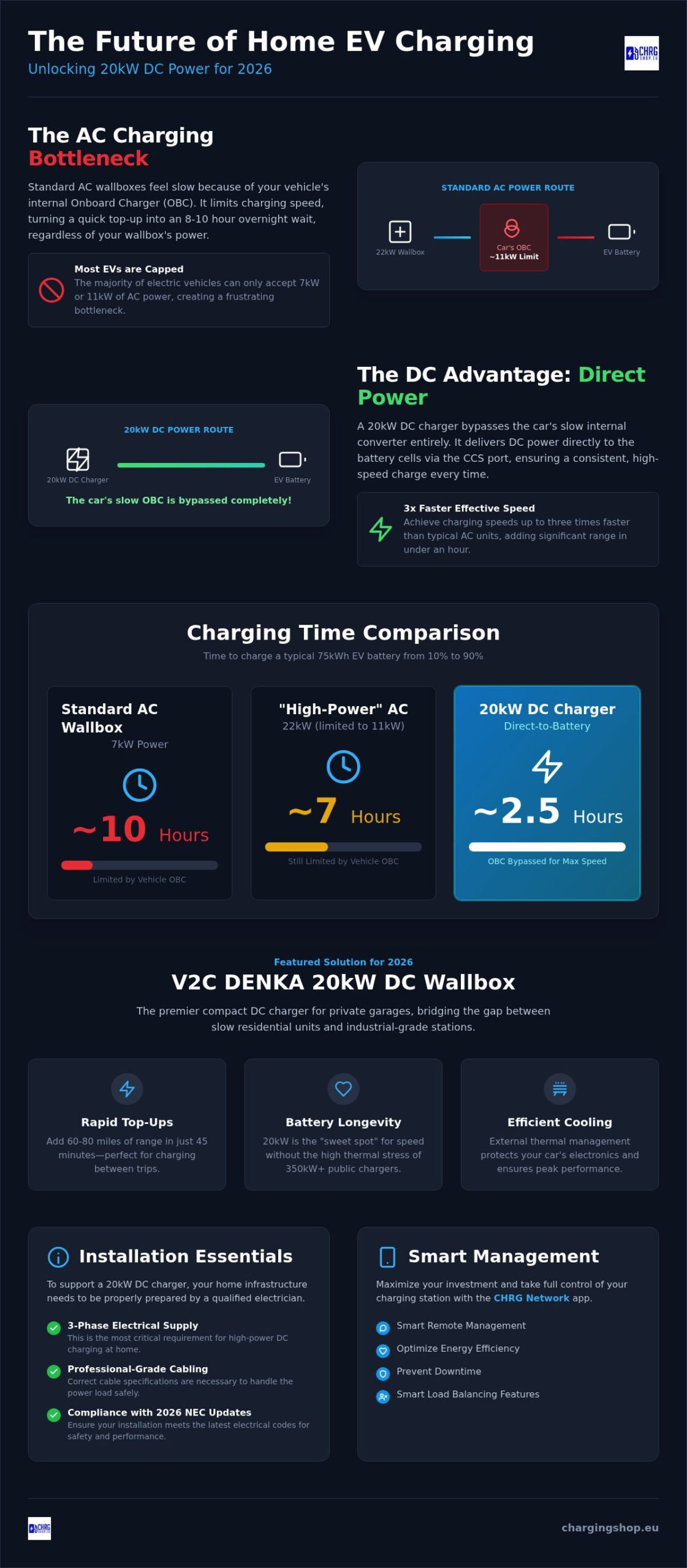
Why does your 22kW AC charger feel slow? The problem isn’t the wallbox; it’s the car. Every EV has an Onboard Charger (OBC) that converts AC power from the grid into DC power for the battery. This internal converter is a massive bottleneck. Most modern vehicles are capped at 7kW or 11kW for AC intake. Even if you install a high-capacity AC unit, your car will only pull what its internal hardware allows. This leaves you stuck with “overnight-only” charging sessions that can’t keep up with multiple daily trips or spontaneous plans.
The 20kW DC Advantage: Bypassing the Bottleneck
DC charging changes the game by moving the conversion process outside of the vehicle. By using the Combined Charging System (CCS) standard, a 20kw dc home charger delivers electricity directly to your battery cells. You bypass the restrictive internal OBC entirely. This ensures a consistent, high-speed charge regardless of your car’s AC limitations. DC charging bypasses internal vehicle conversion for maximum speed.
This hardware is perfect for “top-up” charging. Instead of waiting all night, you can add significant range in under an hour between errands or before a long evening drive. It’s about flexibility and reclaiming your time. You gain the ability to support larger 100kWh+ batteries without the anxiety of a depleted cell. Choose the V2C DENKA to secure this professional performance for your home setup. It’s the most efficient way to future-proof your infrastructure and stay ahead of the curve. Don’t let your car’s internal converter dictate your schedule.
AC vs. DC: Why 20kW DC is Superior for Rapid Home Charging
Stop thinking of home charging as a slow, overnight chore. While standard AC units rely on your car’s limited internal converter, a 20kw dc home charger delivers power directly to the battery cells. This fundamental shift transforms your garage into a high-speed hub. It’s the difference between waiting for a trickle and enjoying a flood of energy. You gain the freedom to drive on your own terms without tethering your vehicle to a wall for 10 hours at a time.
Charging Speed Comparison: 7kW vs 22kW vs 20kW DC
Let’s look at the data for a standard 75kWh battery, typical of a Tesla Model 3 or Y. On a common 7kW AC charger, you’re looking at roughly 10 to 11 hours for a full cycle. Even with a 22kW AC unit, most cars are capped by their internal hardware, often still taking 7 hours or more. With a 20kW DC setup, you can reach the critical 80% charge milestone in approximately 2.5 hours. This speed ensures your vehicle is ready for any spontaneous trip, providing 2026 EV models with maximum daily readiness.
Efficiency and Heat Management
Heat is the enemy of efficiency and hardware longevity. High-amp AC charging generates significant internal heat within the vehicle’s onboard converter during the conversion process. Modern DC wallboxes, like the V2C DENKA, manage these thermal loads externally. These compact units use advanced cooling systems to maintain peak performance without stressing your car’s internal electronics. This external management makes 20kW DC safer for home circuits compared to pushing a 32A AC circuit to its absolute limit for half a day. When Preparing Your Home for a 20kW DC Installation, you’re investing in a system designed for thermal stability and long-term reliability.
Forget the myths about DC charging and battery degradation. While 350kW ultra-fast public stations generate extreme heat, 20kW is the “sweet spot” for longevity. It provides rapid power without the thermal stress of industrial-grade hardware. Choosing a 20kw dc home charger allows for “opportunity charging” at home. Plug in for 45 minutes between meetings and add 60 to 80 miles of range instantly. It’s proactive energy management for the modern driver. Explore our Personalised Charging Offers to find the perfect hardware for your specific vehicle and home layout.
Featured Solution: The V2C DENKA 20kW DC Wallbox
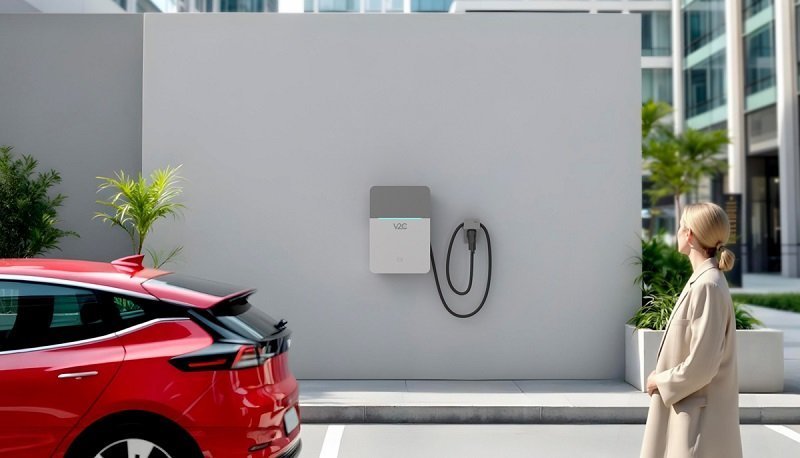
Don’t settle for unbranded, generic hardware that lacks long-term support. The V2C DENKA is the premier choice for homeowners who refuse to compromise on speed. This Spanish-made powerhouse brings commercial rapid charging technology into a compact, wall-mountable frame. It’s designed to fit seamlessly into private garages while delivering the same performance you expect from public infrastructure. By choosing this 20kw dc home charger, you’re investing in a refined piece of engineering that prioritizes both form and function.
Compatibility is never an issue. The DENKA features the standard CCS Combo Type 2 connector, making it ready for almost every new electric vehicle on the market in 2026. You can choose between integrated 5m or 7m cable options to ensure the plug reaches your vehicle comfortably, regardless of your parking orientation. It’s a plug-and-play solution that removes the friction from your daily routine. You get professional-grade hardware that respects your space and your schedule.
Smart Features and Connectivity
Control your energy with surgical precision. The V2C DENKA integrates directly with your smartphone, providing a suite of smart management tools. Use the app to schedule charging during the cheapest energy windows or adjust the power draw to match your home’s current load. You can start, pause, or stop sessions from anywhere in the world. The system also delivers real-time telemetry, giving you an exact view of your battery’s State of Charge (SoC). The V2C DENKA’s interface is the most intuitive in the 20kW class, stripping away complexity to focus on what matters: results.
Industrial Build in a Residential Form Factor
Expect durability that lasts for a decade. This unit carries an IK10 impact rating and an IP54 weather resistance certification. Whether you install it in a dusty garage or on an exposed exterior wall, it’s built to withstand the elements. It replaces the bulky, industrial cabinets of the past with a sleek, modern aesthetic that enhances your property. If you decide that DC is more than you need, or if you’re looking for a top-tier AC alternative, explore the V2C Trydan 22kW. For those who want the fastest home experience possible, this 20kw dc home charger remains the undisputed leader. It’s time to upgrade your infrastructure with a solution that balances technical authority with everyday utility.
Power Requirements: Preparing Your Home for a 20kW DC Installation
Bringing rapid charging home requires more than just a wall-mounted box. You’re installing industrial-grade technology. The 20kw dc home charger demands a robust electrical foundation to operate safely and efficiently. Don’t underestimate the infrastructure needed to support these speeds. You must ensure your property can handle the load before making the purchase. It’s about safety, reliability, and maximizing your hardware investment.
Three-phase power is the non-negotiable requirement for 20kW DC hardware. Most residential properties operate on a single-phase supply. This is sufficient for standard appliances but falls short for high-performance DC units. You’ll likely need a dedicated sub-panel. This isolates the charger from your home’s main circuits, preventing interference and ensuring consistent power delivery. Use a 40A or 63A circuit breaker based on your specific hardware specs. High-quality cabling is essential to manage the continuous current without overheating or energy loss.
The 3-Phase Checklist
Verify your supply before you begin. Check your electrical meter or main breaker panel. A three-pole main breaker usually indicates a 3-phase supply. If you only see a single-pole or double-pole switch, you’ll need a grid upgrade. This is a significant infrastructure investment, but it future-proofs your home for the next generation of high-capacity EVs. Ensure your electrician installs Type B RCDs. These protective devices are specifically designed to detect DC leakage, providing a critical layer of safety that standard AC protectors miss.
Space and ventilation are equally important. While the V2C DENKA is compact, it generates heat during rapid sessions. Mount the unit in a well-ventilated area with at least 50cm of clearance on all sides. Avoid cramped corners or airtight enclosures. Proper airflow maintains peak efficiency and protects the internal components from thermal stress during the peak of summer.
Selecting the Right Location
Placement affects performance. Minimize the distance between your main meter and the charger to reduce voltage drop. Long cable runs lead to energy loss and slower speeds. Consider the weight of the hardware. DC cables are heavy-duty and less flexible than AC versions. Mount the unit at an accessible height, typically between 1.2m and 1.5m, to make handling the connector easier for daily use. Ensure the mounting surface can support the weight of the wallbox and the heavy-duty cable.
If your property has power limitations that make 3-phase upgrades impossible, you aren’t out of options. You can still achieve impressive speeds with a high-capacity AC setup. Check out our 22kW Home Wallbox guide for a faster AC alternative. For those ready for the ultimate upgrade, get a Personalised Charging Offer today to confirm your home’s compatibility with a 20kw dc home charger. Our experts help you navigate the technical specs so you can focus on the drive.
Maximizing Your Investment with the CHRG Network
Don’t leave your hardware to operate in a vacuum. A 20kw dc home charger is a serious piece of infrastructure, and managing it manually is a recipe for inefficiency. The CHRG Network acts as the central nervous system for your setup. It provides the technical authority you need to monitor performance, prevent unexpected downtime, and slash your energy bills. This isn’t just about plugging in; it’s about smart, data-driven energy control. It’s the professional standard for 2026, transforming a standalone wallbox into a fully managed energy hub.
Remote management is a game-changer for modern EV owners. If a fault occurs, you’ll know before you even walk out to your car. The network allows you to push firmware updates over-the-air, ensuring your V2C DENKA stays compatible with the latest EV software. It’s the most reliable way to future-proof your driveway. You gain total visibility over every session, ensuring that your investment pays for itself through optimized energy usage and proactive maintenance. Stop guessing and start measuring.
Remote Monitoring and Automated Billing
Shared spaces require precision. Whether you’re managing a small office lot or a shared residential driveway, the CHRG Network handles multi-user access with ease. You can track every kWh used by guests, employees, or family members. This level of detail is essential for generating automated reports for tax deductions or company reimbursements. You can even set custom tariffs if you decide to monetize your station for visitors. For a deep dive into these tools, consult our CHRG Network Management Guide. It’s the ultimate resource for station owners who value transparency and logistical reliability.
Future-Proofing with OCPP
Hardware changes, but your network shouldn’t have to. The combination of the V2C DENKA and CHRG Network is built on OCPP 1.6J and 2.0.1 standards. This makes your system “vendor agnostic,” meaning you aren’t locked into a single ecosystem forever. As we move further into 2026, these protocols are vital for emerging trends like Vehicle-to-Grid (V2G) and Vehicle-to-Home (V2H) energy sharing. You’re buying more than a charger; you’re securing a seat at the table for the future of the smart grid. Prepare your home for the next decade of energy innovation now.
Stop waiting for the future to happen to you. Take charge of your energy today and experience the speed of professional-grade hardware. Get your personalised charging offer today! and bring the power of the 20kw dc home charger to your driveway with zero friction.
Secure Your High-Speed Charging Future
Bringing rapid power to your driveway is no longer a luxury; it’s a necessity for the modern EV driver. You’ve seen how a 20kw dc home charger bypasses internal vehicle bottlenecks to slash charging times to under two hours. This technology future-proofs your home against the shift toward 100kWh+ batteries. By pairing the V2C DENKA with the CHRG Network, you gain total control over your energy costs and hardware health. Don’t let slow AC wallboxes dictate your schedule. It’s time to invest in a solution that matches your vehicle’s performance.
As an Authorized V2C Global Partner, Charging Shop delivers the technical authority you need for a seamless transition. Our inventory features OCPP 2.0.1 Ready Hardware designed for long-term reliability and smart grid integration. We provide Expert Technical Support to ensure your 3-phase setup operates at peak efficiency from day one. Take the next step toward energy independence and professional-grade speed.
Shop the V2C DENKA 20kW DC Wallbox at Charging Shop and experience the standard of 2026. Your rapid charging journey starts here.
Frequently Asked Questions
Is a 20kW DC charger safe for my car battery long-term?
Yes, 20kW is considered the “sweet spot” for rapid home charging. Unlike 350kW public ultra-fast chargers that generate extreme heat, a 20kW output provides speed without significant thermal stress. Modern battery management systems (BMS) easily handle this level of power. It’s much safer than pushing high-amperage AC for 10 consecutive hours. You get rapid recovery without compromising the chemical longevity of your battery cells.
Do I need 3-phase power to install a 20kW DC wallbox at home?
Yes, a three-phase 400V electrical supply is a non-negotiable technical requirement. Most standard residential properties operate on single-phase power, which cannot support the high-current draw of a 20kw dc home charger. You’ll need to consult your local grid operator for a supply upgrade. This infrastructure ensures your charger receives stable, high-voltage power without overloading your home’s main electrical panel or affecting other household appliances.
What is the main difference between a 22kW AC and 20kW DC charger?
The primary difference is where the power conversion happens. An AC charger relies on your car’s internal onboard charger (OBC), which is often limited to 7kW or 11kW. A 20kW DC unit converts power externally and sends it directly to the battery. This means a 20kW DC charger is often twice as fast as a 22kW AC unit in real-world scenarios because it bypasses the vehicle’s restrictive internal hardware.
Can I install a 20kW DC charger in a standard residential garage?
Yes, provided you have the necessary electrical infrastructure and proper ventilation. Compact units like the V2C DENKA are specifically designed for wall mounting in private garages. You need enough wall space to support the unit and clearance for airflow to manage heat during rapid sessions. Ensure your garage meets the IP54 rating requirements for moisture protection and has a dedicated sub-panel to handle the continuous high-performance load safely.
Does the V2C DENKA work with all electric vehicle brands?
The V2C DENKA uses the universal CCS Combo Type 2 connector, making it compatible with the vast majority of modern EVs. This includes brands like Tesla, BMW, Audi, and Hyundai that follow the CCS standard. As long as your vehicle supports DC fast charging through a CCS port, the DENKA will deliver high-speed power. It’s a future-proof solution that works across different manufacturers, ensuring your hardware remains useful even if you switch cars.
How much faster is 20kW DC compared to standard 7kW home charging?
A 20kw dc home charger is approximately three times faster than a standard 7kW AC wallbox. For a typical 75kWh battery, a 7kW charger takes over 10 hours for a full cycle. The 20kW DC unit can reach the 80% charge milestone in about 2.5 hours. This drastic reduction in wait time allows for multiple daily trips and “opportunity charging” that simply isn’t possible with lower-capacity residential AC equipment.
Can I manage multiple 20kW DC chargers with the CHRG Network?
Absolutely. The CHRG Network is designed to manage everything from single home units to large commercial clusters. You can monitor multiple stations from a single dashboard, tracking energy consumption and user access in real-time. This is ideal for small office buildings or households with multiple EVs. The platform provides automated reporting and load balancing tools, ensuring that your local grid isn’t overwhelmed when several high-power chargers operate simultaneously.
What happens if my home grid cannot support 20kW of continuous load?
If your grid capacity is limited, you should utilize the smart load balancing features integrated into the V2C DENKA. The hardware can dynamically adjust its power output based on your home’s real-time energy consumption. This prevents tripped breakers and protects your infrastructure. If a 20kW continuous draw is consistently impossible, we recommend exploring a high-capacity AC alternative like the V2C Trydan 22kW, which offers more flexibility for power-constrained residential environments.
