
 Deutsch
 Dansk
 Suomi
 Latviešu
 Lietuvių
 Norsk bokmål
 polski
 Русский
 Svenska

No products in the cart.
Uncategorized
EV Charging as a Tenant Amenity: Costs and Incentives
05
Nov
Nov
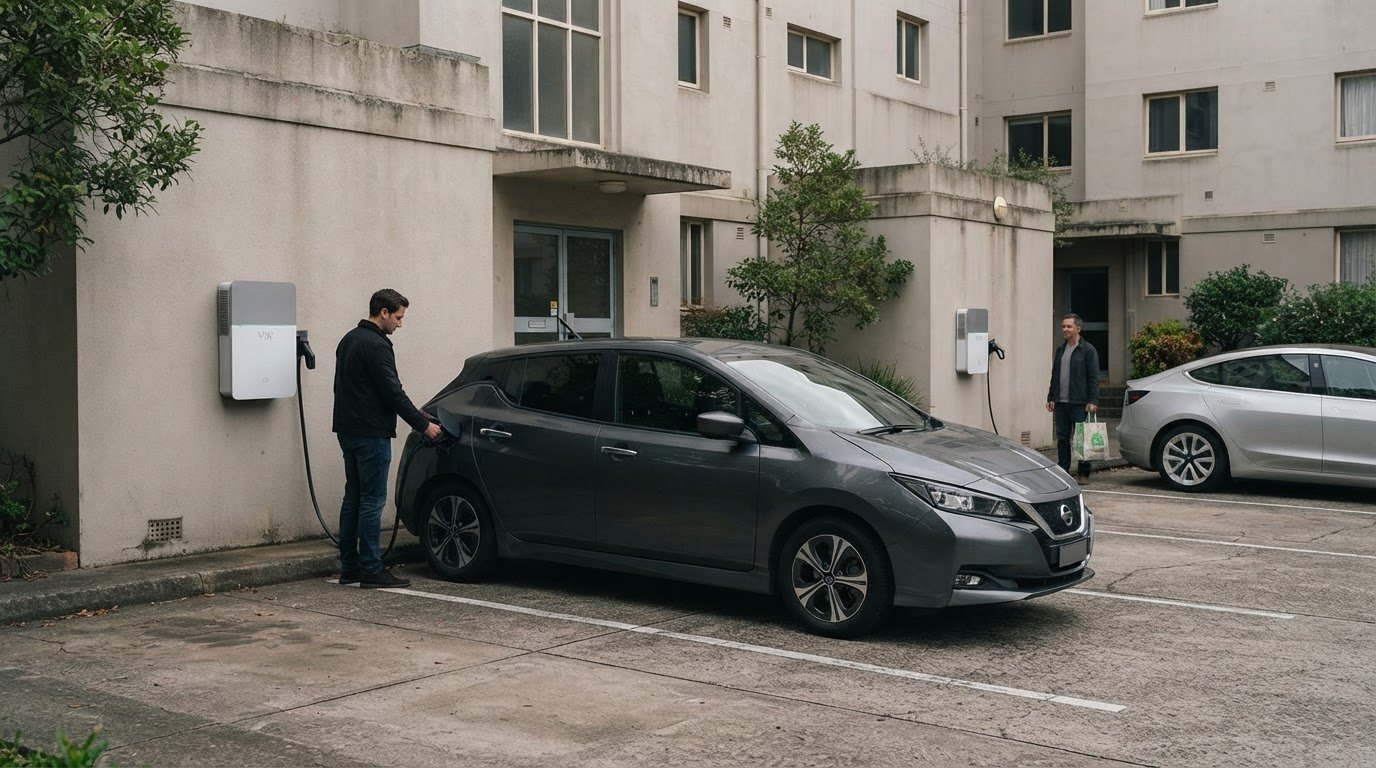
Limited electrical capacity doesn’t automatically rule out EV charging as an amenity for tenants. A building can assess its available power with a load study, then manage demand by limiting the number of chargers, using smart load management, or phasing in shared charging. Lower-powered charging can also give residents a practical option without requiring a high-powered station at every parking space.
It’s reasonable to worry that an upgrade could be expensive or that a shared charger won’t suit every resident. The right approach depends on the building’s electrical capacity, parking setup, and how residents will access and pay for charging. This guide explains how incentives may offset costs and how access, pricing, billing, and electrical limits shape the decision.
You’ll also see how Level 1 and Level 2 charging differ, when load management can help, and why a phased plan may fit an existing property better than installing chargers everywhere at once. Use these factors to understand what’s practical for your building before deciding how charging should work as a tenant amenity.
Key Takeaways
- Explore federal and local incentives, and learn which eligibility conditions can affect potential savings.
- Set clear rules for who can use shared chargers, how residents pay, and how charging costs are billed.
- Match charging plans to the building’s available electrical capacity, using load management or a phased rollout where appropriate.
- Choose a fair way to allocate equipment costs and electricity bills so residents understand what they pay for.
Are incentives available to offset the cost of installing an EV charging station in my building?
Yes. Federal and local incentives may reduce eligible installation costs, but eligibility depends on the property, equipment, and work. According to the Internal Revenue Service, the federal Alternative Fuel Vehicle Refueling Property Credit can provide a residential EV charger installation tax credit of up to $1,000, equal to 30% of costs, subject to eligibility conditions. The Internal Revenue Service says this federal residential credit is set to expire for property placed in service after June 30, 2026.
Installation estimates vary by location and project scope. These figures describe different project scopes, so electrical work and site conditions matter when comparing budgets.
Start with the property’s location and installation plan when looking for support. Utility rebates may help cover equipment and installation, while government incentives or grants may support retrofits in existing buildings. A proactive plan can identify potential funding before you select equipment or electrical work. For a landlord considering multiple charging ports, phasing installation can align spending with demand and available support.
Insurance rules can also affect a tenant-requested installation in California. Senate Bill 638 took effect January 1, 2020, eliminating the insurance requirement when the charger is NRTL-certified and all electrical work is performed by a licensed electrician. If either condition is unmet, a landlord may require personal liability coverage of up to 10 times the tenant’s annual rent. That makes certified equipment and qualified electrical work key planning considerations.
The main risks include installation costs, limited electrical capacity, insurance conditions, and agreeing on fair access and billing. A building assessment and a clear charging policy can help identify these issues before installation begins.
Charging can strengthen a property’s appeal, but higher rents, occupancy, or value aren’t automatic. A peer-reviewed study of California real-estate transactions found a 3.3% average premium for homes within approximately 0.6 miles of a charging station, with a 5.8% premium around 0.25-0.3 miles. Those findings concern nearby access, not a guaranteed return for an apartment building.
Charging station access, pricing, and billing
Set access and payment rules alongside the charger plan. Clear terms help residents understand who can charge, when stations are available, and how electricity costs are handled.
Tenant Access and Charging Prices
Tenant access rules define who may use a charger and how charging sessions are priced. For a shared station, a property can set an agreed booking process or shared-use policy; a dedicated space ties access to its assigned tenant. Explain whether charging is billed separately or included in rent, and how residents can find the current terms. Clear rules help prevent disputes over availability and payment.
Keep the policy practical. State who may use each charger, how residents gain access, and what happens when a session ends. Pricing can be based on electricity used, a session, or an agreed flat charge. Santa Monica’s Rent Control Regulation, section 3201, allows a landlord and tenant of a rent-controlled property to enter into a separate agreement for charging an electric vehicle. Put any agreed terms in writing.
Allocating Charger and Electricity Costs
Cost allocation determines how equipment expenses and electricity bills are divided between the property and participating tenants. A dedicated charger can make it easier to assign electricity use to one resident, while a shared charger needs a transparent cost-sharing method. Residents should be able to see how their charging use relates to their bill.
Separate the one-time equipment decision from ongoing electricity charges. A property may fund the station as an amenity, recover agreed equipment costs through its chosen arrangement, or charge users for charging. For electricity, use a clear billing basis tied to each resident’s use where the system supports it. Explain how shared sessions, idle vehicles, and access changes are handled. CHRG Network Access supports efficient station management; a Personalised Charging Offer can help shape a charging setup around the property’s needs.
Before opening access, document the pricing basis, billing frequency, payment process, and responsibility for station upkeep. Review the terms when access changes or the property adds chargers. A written policy gives residents a consistent reference and helps property managers answer questions without changing the rules from session to session.
Electrical capacity and lower-powered charging
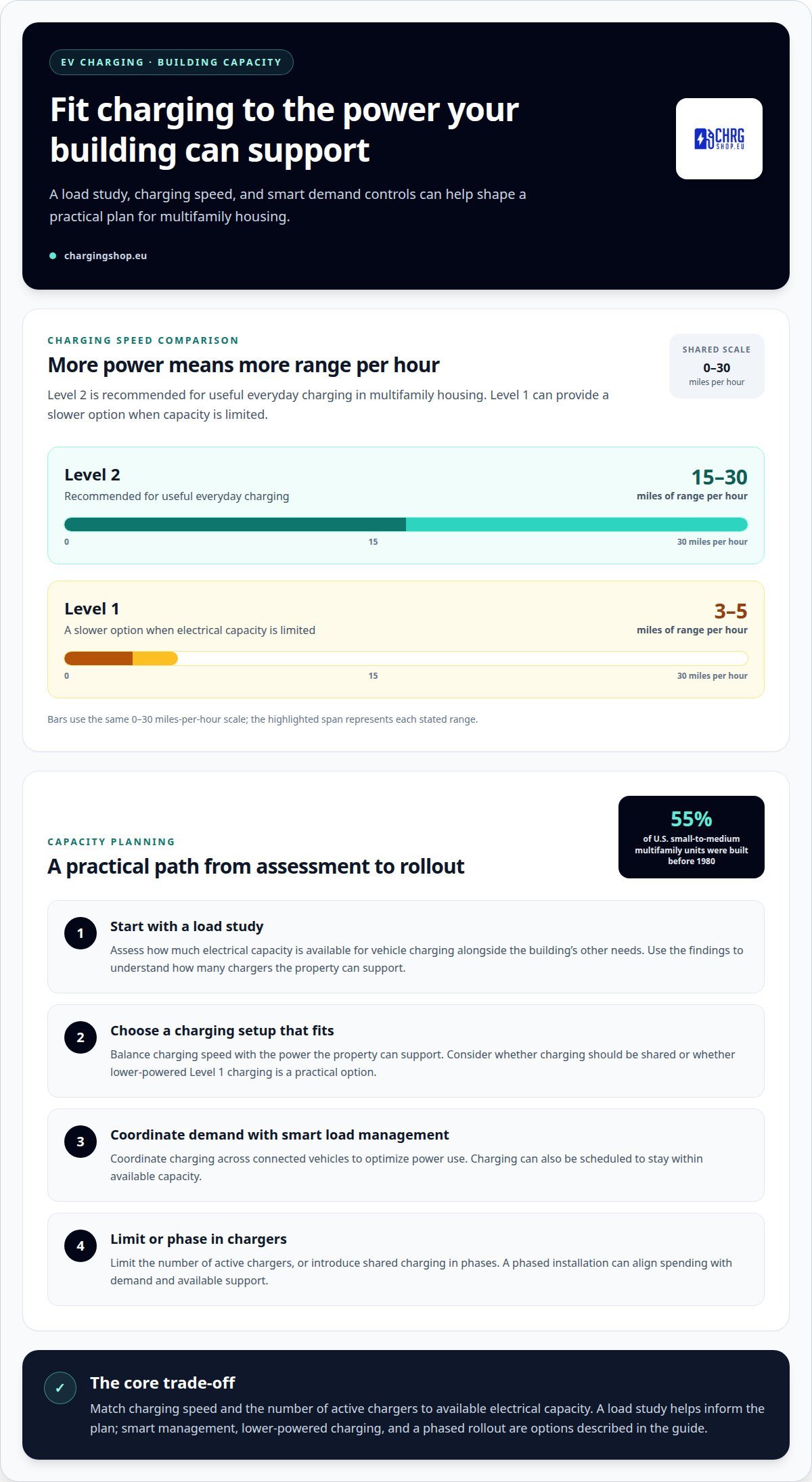
For multifamily housing, Level 2 stations are recommended for useful everyday charging. They typically add 15 to 30 miles of driving range per hour. Where a building’s electrical capacity is limited, Level 1 charging can provide a slower option, adding about 3 to 5 miles per hour. The right setup balances charging speed with the power the property can support.
Start with a load study to understand how much electrical capacity is available for vehicle charging alongside the building’s other needs. This matters especially in older properties: 55% of small-to-medium multifamily housing units in the United States were built before 1980. The study can inform how many chargers the property can support and whether charging should be shared or introduced in phases.
Smart load management coordinates charging with available power. Rather than treating each charger as a separate demand, a system can optimize power use across connected vehicles. Property owners can also limit the number of active chargers or schedule charging to stay within available capacity. These approaches can help an existing electrical setup serve more charging needs without assuming every parking space can support a charger at once.
A standard 120-volt wall outlet is another option when capacity is constrained, though Level 1 charging is slower than Level 2. It may suit residents who leave a vehicle parked for longer periods and need a modest daily charge. Shared charging can also give more residents access to available power, provided the property sets clear access and scheduling rules.
For new construction, EV-ready building codes can require infrastructure that allows chargers to be added later, without requiring every charger on day one. Right to Charge laws address installation requests in existing buildings; they generally don’t require major electrical upgrades when those upgrades aren’t technically or economically feasible. These distinctions help owners plan around the building’s actual capacity rather than assume full-speed charging is needed everywhere.
How do landlords allocate EV charger costs and electricity bills among tenants?
Separate the charger’s upfront cost from the electricity used in each charging session. This distinction helps landlords decide whether charging is a shared property amenity or a user-paid service, and gives residents a clearer view of their charges.
A landlord can fund the charger as a building improvement or create an agreed cost-recovery arrangement for participating residents. The first approach spreads the amenity across the property; the second ties contributions to charger users. Explain which model applies before residents begin charging, including how the property will handle future equipment costs.
Electricity billing should reflect how the station is used. If the charger records the energy delivered to each vehicle, the property can use that information to bill users according to consumption. Another option is a set session charge or agreed flat fee. If charging draws from a shared building meter, define how the property separates charging use from other electricity costs.
Make the policy specific. State who pays for the charger, whether electricity is included in rent, and how often usage charges appear. Explain how residents access bills and dispute a session. For a shared station, also set out how access works when several residents need the same equipment. These details reduce confusion for users and residents who don’t own an electric vehicle.
Tie each billing record to the relevant resident and charging period. For example, a statement can show the billed sessions and how each charge was calculated. Tell residents what happens when they move out or stop using the station, and update access accordingly. Consistent records help property managers apply the same arrangement across tenants.
A Personalised Charging Offer can help align charging equipment choices with a property’s planned access and billing approach. Define the cost model first, then select equipment and management arrangements that support it.
Charging Shop
Charging Shop helps property owners match tenant access plans and electrical needs with suitable EV charging hardware. Its Personalised Charging Offer supports equipment selection for the building’s intended setup, whether the plan involves shared access or chargers assigned to specific spaces.
Charging Shop offers the V2C Trydan and DENKA DC wallboxes as part of its EV charging hardware selection. These options give property owners different hardware to consider as they shape an amenity around the building’s needs. The right choice depends on factors such as available electrical capacity, charging speed, and how residents will use the stations.
Contact Charging Shop to discuss a charging setup for your property.
Make Tenant Charging Part of Your Property Plan
Treat EV charging as an amenity for tenants as an evolving part of the resident experience, not just a hardware decision. A clear plan can connect charging access with how the property manages parking, resident expectations, and future building improvements. Keep the policy easy to understand, and revisit it as usage patterns change. This gives property teams a practical way to improve the amenity while keeping day-to-day operations in view.
The next step is matching the property’s requirements with appropriate charging equipment. Charging Shop offers options including the V2C Trydan 22kW, V2C DENKA 20kW DC Wallbox, and Alfen Single Pro Line 22kW. Share your intended setup and charging priorities to explore a suitable direction for the building.
Contact Charging Shop about tenant charging and take the next step toward a charging plan that fits your property. A considered approach can make the experience clearer for residents and more manageable for property teams.
Frequently Asked Questions
What if the building doesn’t have enough electrical capacity?
Charging can still be planned around the building’s available power. For example, a property could begin with fewer active charging points and expand in phases as demand develops. A standard 120-volt outlet can support slower Level 1 charging, which typically adds 3 to 5 miles of range per hour. Smart load management can also coordinate charging demand across connected vehicles.
Are there additional requirements in order for tenants to install an EV charging station in their buildings?
Yes. Requirements depend on the property’s location and installation arrangement. In California, a tenant requesting a charger in a dedicated parking space generally pays the associated costs. The state’s rule also addresses equipment certification and electrical work: a charger that isn’t NRTL-certified, or work not performed by a licensed electrician, may affect insurance requirements. Building agreements and parking conditions also matter.
Can a landlord or property owner deny a tenant’s request to install an EV charger?
In California, landlords generally must approve a tenant’s request for a charger in the tenant’s dedicated parking space when the tenant pays the associated costs. Exceptions include properties with fewer than five total tenant parking spaces. California Legislative Information identifies another exemption when chargers already serve 10% or more of designated parking spaces. These rules are state-specific, so the applicable location determines the answer.
Do Right to Charge laws apply to apartment buildings and multifamily properties?
Right to Charge laws address tenant requests to install chargers in existing buildings, including multifamily properties. They’re distinct from EV-ready building codes, which apply to new construction and can require infrastructure for future charging. In California, Civil Code section 1947.6 generally covers a tenant’s request for a charger in a dedicated parking space. The property’s location and circumstances determine which requirements apply.
How can I make sure that my tenant pays for the electricity used to charge their EV?
Use a billing method that connects charging use to the resident responsible for payment. Session records or energy-use readings, for example, can support charges based on electricity consumed. If the property instead applies a flat session fee, state that basis clearly in the resident agreement. Explain how charges appear, how residents can review them, and how shared-station use is assigned.
What are the benefits of EV charging as an amenity for apartment tenants and property owners?
For tenants, on-site charging can make routine vehicle charging more convenient, especially when dedicated home charging isn’t available. For property owners, it can help distinguish a building’s amenities and create a potential revenue opportunity when residents pay to use stations. Clear access rules and a workable billing approach help make the equipment a useful property feature rather than an underused installation.
