
 Deutsch
 Dansk
 Suomi
 Latviešu
 Lietuvių
 Norsk bokmål
 polski
 Русский
 Svenska

No products in the cart.
Uncategorized
Ways to prevent EV charger overheating during hot weather
28
Nov
Hot weather doesn’t automatically mean you need to stop charging your EV. To prevent EV charger overheating, keep wiring and connections in good condition, choose a shaded, well-ventilated location, and pay attention to how your vehicle manages battery temperature and charging speed. Some warmth during charging is normal; excessive heat, a burning smell, or visible damage calls for action.
It makes sense to be cautious when temperatures rise, especially during a long charging session. Your EV’s thermal protection helps manage battery heat, but charging may slow in hot conditions, so a lower rate isn’t necessarily a fault. A few practical checks can help distinguish normal warmth from a warning sign.
This guide explains what to look for in charger wiring and connections, how shade and airflow can help, and why battery protection and charging speed matter in hot weather. You’ll also learn when to pause charging and stop using equipment that shows signs of overheating.
Key Takeaways
- Look for worn wires, loose connections, and damage around the charger. Treat repeated breaker trips as a reason to stop and have the circuit inspected.
- Choose a shaded, well-ventilated charging spot when possible, and avoid leaving equipment exposed to direct heat for long sessions.
- Understand that battery thermal protection may reduce charging speed in hot conditions. A slower rate can be the vehicle managing heat, not necessarily a charger fault.
- Stop charging if the unit or cable feels excessively hot, smells of burning, or shows scorch marks or discoloration.
1. Maintenance checks for wires and connections
Knowing how to prevent EV charger overheating starts with a visual check before summer charging sessions. Look for cracked insulation, exposed wire, loose-looking fittings, bent plug blades, or discoloration around the charger, cable, and receptacle. Don’t open the charger or electrical panel. A Level 2 charger can draw 24, 32, 40, or 48 amps for four to eight hours, so damaged connections need attention. Some warmth during charging is normal; extreme heat is not.
In the United States, follow the electrical codes that apply where the equipment is installed. In Wisconsin, SPS 316 adopts the 2023 NEC, effective September 1, 2026; NEC 625.40 requires a Level 2 charger to have its own dedicated circuit. A standard-grade NEMA 14-50 receptacle isn’t designed for nightly charging lasting four or more hours. Have a qualified electrician assess the circuit and installation rather than altering wiring yourself.
If the breaker trips, reset it once. If it trips again, leave it off and have the circuit inspected. Stop charging immediately if the charger or plug feels excessively hot, smells burnt, or shows scorch marks or discoloration. Keep the breaker off and call an electrician. Arrange an inspection if overheating returns, damage appears, or charging repeatedly shuts off. Replacement depends on the inspection findings. Treat recurring problems as a reason for professional inspection, not repeated resets.
Check the vehicle’s battery and charger status on its display or in its app. Note thermal warnings, unusual charging interruptions, or changes from normal operation. Keep plugs and connectors clean and dry, and avoid extension cords or third-party adapters. Check tyre pressure when the tyres are cool, following the vehicle’s recommended pressure. Correct pressure supports efficient driving, while wiring and connections need separate attention to limit electrical heating.
2. Choosing shaded charging locations
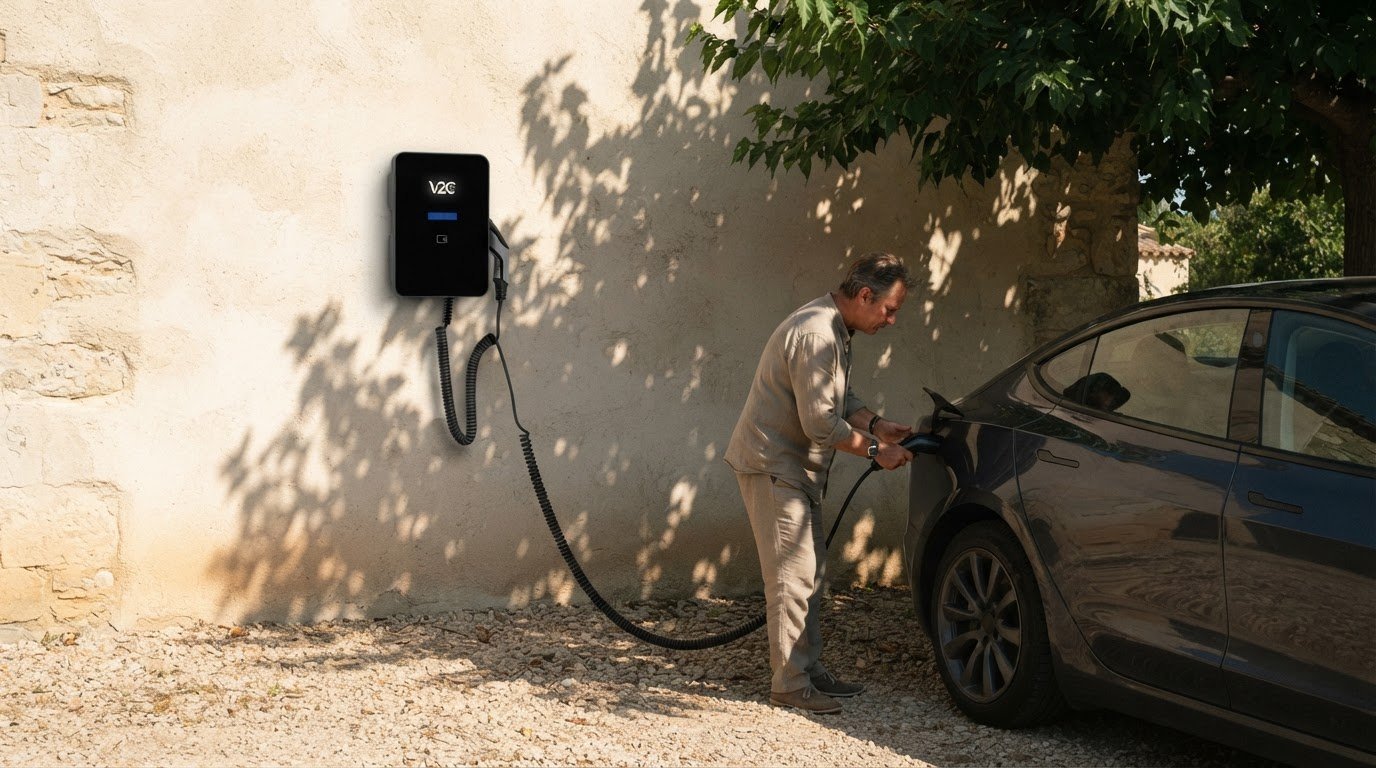
Park your electric vehicle in the shade before plugging in, especially during summer heat. A covered parking space, open-sided carport, or tree shade can reduce direct sun on both the vehicle and charger. Keeping the cabin and battery cooler can also reduce cooling demand once you start driving. Choose a spot where the charger is accessible and the cable reaches without being stretched, crushed, or routed across a walking path.
Give the charger space to release heat. There’s no single clearance requirement for every model, so follow the charger’s installation instructions. Keep vents uncovered and avoid placing the unit in a tight cabinet, behind stored boxes, or beside objects that block airflow. An open, well-ventilated location helps heat disperse, while a closed enclosure heated by the sun can trap it. Don’t cover the charger with fabric or other materials while it’s operating.
Timing matters too. If you can choose your charging window, charging during a cooler part of the day may help limit heat exposure. After parking in extreme temperatures, wait at least 15 minutes before charging. That pause gives a hot vehicle time to settle before the session begins. Shade helps, but it doesn’t remove heat from the battery instantly.
Check how sunlight moves across your parking area. A spot shaded in the morning may be exposed later, so consider the full charging session, not just the time you plug in. Keep the cable connector out of direct sun where practical, and don’t coil or pile the cable around the charger while charging. If a garage gets hot, open its door or use another ventilated location when safe. These choices help heat disperse without restricting access to the vehicle.

3. Battery thermal protection and charging speed
Hot weather affects the vehicle battery as well as the charger. Electric vehicles are most efficient at ambient temperatures of about 20-25 °C, while a lithium-ion battery can start overheating above 35 °C. High temperatures can temporarily reduce usable capacity, slow charging, or activate thermal protection. Repeated or prolonged heat exposure can also speed battery degradation and reduce stored energy over time.
Your vehicle’s thermal management and battery management systems help control battery temperature and performance. Depending on the design, cooling pipes circulate coolant around the battery and electric motors, while radiators transfer heat to the surrounding air. These systems use energy, especially when cooling demand is high, which can affect driving range. If the battery gets too hot, the vehicle may limit charging power to manage heat. Don’t assume every slowdown in hot weather is a charger fault.
For routine top-ups in hot weather, prioritize a 7 kW to 22 kW charger over fast charging. Higher charging power transfers energy more quickly and can produce more heat, while a slower session gives the vehicle’s controls more opportunity to manage temperature. Set a routine charging limit of 80%, and use a 20%-80% range to support battery health. Follow the vehicle’s own charging controls and warnings rather than overriding a thermal limit.
Track changes on the vehicle’s display or in its mobile app. A thermal warning, reduced charging rate, or unusual energy use can help explain what’s happening. Cabin cooling also uses energy: pre-condition the cabin while plugged in, use ECO mode, and enable recirculation when suitable. If the vehicle reports excessive battery heat, pause charging and let it cool. Resume only after the warning clears and the vehicle’s normal charging controls allow it.
4. What are the warning signs of an overheating EV charger or charging cable?
An EV charger can feel warm during use because electrical resistance naturally produces heat. Warmth alone doesn’t mean something is wrong. Treat extreme heat differently: stop the session if the charger, plug, or cable feels excessively hot. Don’t keep charging to see if it cools down. A hot connector or cable may signal a problem that needs attention.
Look for visible changes around the charger and vehicle connection. Scorch marks, dark patches, melted areas, or discoloration on the plug, socket, cable, or wallbox are warning signs. A burning or hot-plastic smell also calls for immediate action, even if there’s no visible damage. Check these areas visually, but don’t open the charger or electrical panel.
If you notice a burning smell, visible scorch marks, or excessive heat, stop charging and leave the breaker off. Don’t unplug or handle a connector that feels dangerously hot. Arrange an electrician’s inspection before using the affected circuit again. If the breaker trips repeatedly or charging shuts off unexpectedly, don’t keep restarting the session. A circuit or charger fault needs investigation.
A slower charging rate in hot weather may be caused by the vehicle’s battery thermal protection rather than a charger fault. Check the vehicle display for a temperature warning and note whether charging resumes under normal controls after the battery cools. A burning smell, visible damage, or repeated shutdowns points to a different concern. Record what happened and where you noticed heat, then share those details with the electrician. Stop using damaged equipment until it’s inspected.
Charging Shop
Charging Shop can help you consider EV charging hardware when you’re choosing equipment for your vehicle or reviewing your charging setup. Its range includes the V2C Trydan 22kW, V2C DENKA 20kW DC Wallbox, and Alfen Single Pro Line 22kW, alongside a Personalised Charging Offer. The right option depends on your vehicle, charging needs, and the electrical setup serving the charger. Product choice alone won’t resolve overheating caused by damaged wiring, a faulty connection, or poor ventilation. Address those warning signs before using affected equipment again. If you’re comparing charging options after reviewing these heat-prevention steps, contact Charging Shop to discuss your requirements.
Make heat management part of your charging routine
Hot weather is a good prompt to assess whether your charging setup still suits your daily routine. Preventing EV charger overheating means treating seasonal heat management as part of using your equipment, not as a one-time adjustment. Consider how your vehicle, parking conditions, and charging habits work together as temperatures change. This broader view can help you make informed decisions about your setup over time.
If you’re selecting charging equipment or weighing options for a different use pattern, match the choice to your vehicle and charging needs. Charging Shop offers EV charging hardware and a Personalised Charging Offer to help you explore suitable options. For advice on your requirements, contact Charging Shop. Take the next step with a clear understanding of your setup, and keep your charging routine ready for warmer days.
Frequently Asked Questions
Can you charge your EV in hot weather?
Yes, you can charge an EV in hot weather, but the vehicle may limit charging speed to manage battery temperature. For example, a slower session during a heatwave may reflect the vehicle’s thermal controls rather than a charger fault. Check charging status and warning messages to understand what’s happening. If the vehicle displays a battery temperature warning, follow its instructions and pause charging if directed.
Is it normal for a charger to heat up?
Yes, some warmth is normal because electrical resistance produces heat as power flows through the charger and cable. That’s different from a unit that feels excessively hot, smells of burning, or has visible discoloration. Don’t rely on touch alone to diagnose the cause. If the plug or charger shows these warning signs, stop charging and keep the equipment out of use until it’s inspected.
Why Is My EV Charger Overheating?
A charger may overheat when hot conditions and a long charging session add to the heat produced during normal operation. A poor connection or damaged cable can also pose a safety concern. Consider what changed: did the issue start during unusually hot weather, after the plug or receptacle became loose, or alongside a breaker trip? Stop charging if you notice a burning smell, excessive heat, or damage.
What causes an EV charger to overheat?
Heat can build during sustained power transfer, especially when ambient temperatures are high or airflow around the unit is restricted. Damaged wires, worn parts, or loose connections can also indicate an electrical problem. For example, a cable trapped under a heavy object may be damaged even if the charger looks intact. Check only visible surfaces, and don’t open the unit or electrical panel.
How can I prevent an EV charger from overheating at home?
Choose a suitable charging location, keep airflow around the charger unobstructed, and schedule charging during cooler hours when practical. Visually inspect the cable and plug before use, and don’t rely on extension cords or third-party adapters. Watch for vehicle alerts and unexpected charging interruptions. If the breaker trips again after one reset, leave it off and have the circuit inspected.
What outlet, breaker, and wiring requirements reduce EV charger overheating risks?
A Level 2 charger should have its own dedicated circuit under NEC 625.40. Continuous EV charging loads are limited to 80% of the breaker rating; for example, 24 amps on a 30-amp breaker is a correct pairing. A NEMA 14-50 receptacle is common for plug-in Level 2 charging, but standard-grade versions aren’t designed for nightly sessions lasting four or more hours.
