
 Deutsch
 Dansk
 Suomi
 Latviešu
 Lietuvių
 Norsk bokmål
 polski
 Русский
 Svenska

No products in the cart.
Uncategorized
EV charger with power meter: compare output and energy tracking
04
Nov
Nov
The highest-output charger isn’t automatically the best choice. A home Level 2 charger generally delivers 6-19 kilowatts using 240-volt AC, while an EV charger with a power meter tracks the energy transferred to your vehicle.
You need a charger that suits your vehicle and electrical setup, along with energy data that helps you understand charging use. Compare output and current settings with what the meter records: energy, power, voltage, current, and session duration. These readings show how much electricity charging uses and help you spot patterns in your routine.
This guide compares charger output, current settings, electricity cost tracking, home energy monitoring, and outdoor protection ratings. It explains which features matter for your setup, how charger-level data differs from whole-home monitoring, and what to consider before choosing. Use the criteria table and decision guide to narrow your options without focusing on output alone.
Key Takeaways
- Match charger output and amperage to your vehicle and home electrical setup, rather than choosing by peak output alone.
- See how electricity rates and recorded energy use shape charging cost estimates.
- Separate charger-level data from whole-home monitoring to understand what each can reveal about consumption.
- Compare meter accuracy and outdoor protection alongside charging needs to narrow your options.
Charger output and amperage
Output tells you how quickly a charger can deliver energy; amperage helps explain its electrical demand. Level 1 home charging uses 120-volt AC and produces roughly 1 kilowatt. Level 2 uses 240-volt AC and generally produces 6-19 kilowatts. Actual charging also depends on the vehicle’s capacity and the electrical supply.
Compare the rated current, voltage, connector, and installation type. For example, a Level 2 charger with a NEMA 14-50 plug is rated at 40 amps, 240 volts, and 9.6 kW. A hardwired J1772 Level 2 charger rated at 48 amps delivers 11.5 kW. An adjustable-current model rated at 32 amps and 240 volts lets the user select a lower current setting.
| Option | Rated output | Amperage | Useful comparison |
|---|---|---|---|
| Level 1 home charging | Roughly 1 kW | Not specified | 120-volt AC supply |
| Level 2, NEMA 14-50 plug | 9.6 kW | 40 amps | 240 volts |
| Adjustable-current Level 2 | Not specified | 32 amps | 240 volts; 25-foot cable |
| Hardwired J1772 Level 2 | 11.5 kW | 48 amps | Compare with vehicle limits |
Choose by matching the vehicle’s charging limit and the available home supply. A 40- or 50-amp household circuit is described as a middle ground for charging most EVs overnight. Higher rated output won’t help if the vehicle or circuit cannot support it.
Do U.S. electrical codes or utility rules require a meter for an EV charger? Requirements depend on applicable local rules and utility programs. A charger’s energy meter is not a universal substitute for the utility’s billing meter; its role is to track charging use.
How much do EV chargers with power meters cost in the United States? The cost depends on output, metering and monitoring features, and installation work. Compare the full equipment and installation scope, not just the meter feature.
How do I install one safely? Have a qualified electrician assess the supply, circuit capacity, wiring, and mounting location, then install and test the charger according to applicable requirements. The Internal Revenue Service describes a federal tax credit of 30% of total EV-charging costs, capped at $1,000, with an expiration date of June 30, 2026.
Electricity cost tracking
An EV charger with power meter can turn charging sessions into a practical record of electricity use. Start with the session’s energy total, measured in kilowatt-hours (kWh), then match it to the electricity rate that applied during that session. Kilowatts describe power at a given moment; kWh measures energy used over time.
For a basic estimate, multiply the session’s kWh by the applicable rate. With a flat-rate plan, use that rate consistently. If rates vary by time, apply the rate for the charging period. An EV charger with power meter records session energy, while your electricity plan determines how that energy translates into an estimated cost.
- Record the session date and its kWh total.
- Identify the electricity rate for that charging period.
- Multiply the energy total by the applicable rate.
- Compare sessions to see how charging time affects estimates.
Keep charger readings separate from utility statements. A charger meter records energy passing through the charging point, while the household bill follows the utility’s billing arrangement. The records may cover different things, so a charger reading is not a complete household bill. If the bill includes separate charges, apply the relevant rate structure rather than relying on a single energy figure.
Can EV charger power meter data be used for utility billing or reimbursement? It can document energy delivered, but it does not automatically determine utility billing or guarantee reimbursement. Utility bills follow the applicable metering arrangement, and reimbursement depends on the employer’s policy.
For clearer comparisons, use the same calculation method for every session. Record the date, duration, energy total, and rate used. This makes it easier to assess whether charging in a different rate period changes the estimated cost. Meter records show charging use; rates and billing terms determine the calculation.

Home EV charger energy monitoring and tracking
An EV charger meter can record charging power, voltage, current, and session duration. Compare where each measurement is taken and which data you need to review.
Built-In Charger Metering
A built-in meter measures energy transferred through the charger and can link readings to charging sessions. This data helps you review when charging occurred and how consumption varies between sessions. Since measurement happens at the charger, it focuses on EV charging rather than other household loads. It suits drivers who want a clear record of vehicle charging.
Separate Energy Meters
A separate meter measures energy at its own point in the electrical system, so it may provide a different view from charger-level readings. Compare its measurement location with the built-in meter: a charger reading follows EV charging, while a meter elsewhere may capture a wider circuit or supply. For a useful comparison, align readings by session and note which loads each includes.
How do I compare built-in EV charger metering with a separate energy meter? Compare measurement location, recorded parameters, session detail, and whether the reading isolates the charger or includes other loads. Choose the data that matches your goal, such as reviewing individual sessions or monitoring a wider electrical feed.
Accuracy and Tracking Limitations
Meter readings describe measured energy, not every factor affecting battery consumption. Charging data can help you assess patterns, but the meter’s scope matters: it records energy transferred at its measurement point. Check whether reports show power, voltage, current, duration, and session energy together, as each detail answers a different question.
What are the limitations and privacy risks of smart EV charger energy tracking? Session records can reveal charging times and usage patterns, but they do not show the whole home’s consumption unless the meter covers it. Consider account access and data storage settings when comparing options, and choose the reporting detail you need. Compare readings consistently across sessions to identify meaningful changes without treating one measurement as a complete picture of home energy use.
How accurate are EV charger power meters?
A charger meter records energy at its measurement point, so the reading depends on the meter and what you compare it with. Don’t confuse meter accuracy with charging efficiency: the first concerns the reading, while the second concerns energy reaching the vehicle’s battery.
Testing across the EV chargers and vehicles described averaged roughly 5 to 8% charging losses. That figure is not a power-meter error rating. A charger can measure energy correctly even when some energy is lost before it is stored in the battery. Compare readings at equivalent points in the charging process.
Use these checks to decide whether the readings suit your purpose:
- Find the meter’s stated accuracy or tolerance in its technical documentation.
- Confirm whether it records energy delivered, instantaneous power, or both.
- Compare the same charging session at the same measurement point.
- Check whether displayed totals are rounded, especially for short sessions.
For a useful comparison, both readings should cover the same start and end times. For example, compare the charger’s session total with a separate meter measuring that charger’s supply. If one reading includes other household loads, the totals will differ because they measure different energy flows. A whole-home meter and a charger meter answer different questions.
For cost estimates, multiply the charger’s recorded kilowatt-hours by the electricity rate that applies to the session. Treat the result as an estimate of charging energy cost, not a direct measure of battery energy. Use the same measurement method across sessions; consistent readings make changes easier to interpret than one-off comparisons.
For billing or reimbursement, a useful record needs a clear measurement point and identifiable sessions. Save the date, duration, and energy total together. This context helps explain what a reading covers, but it does not establish a universal accuracy threshold or make every charger reading suitable for utility billing.
Choose a meter based on the documented accuracy and the data you need. Explore EV charging options to compare hardware for your setup.
Charging Shop
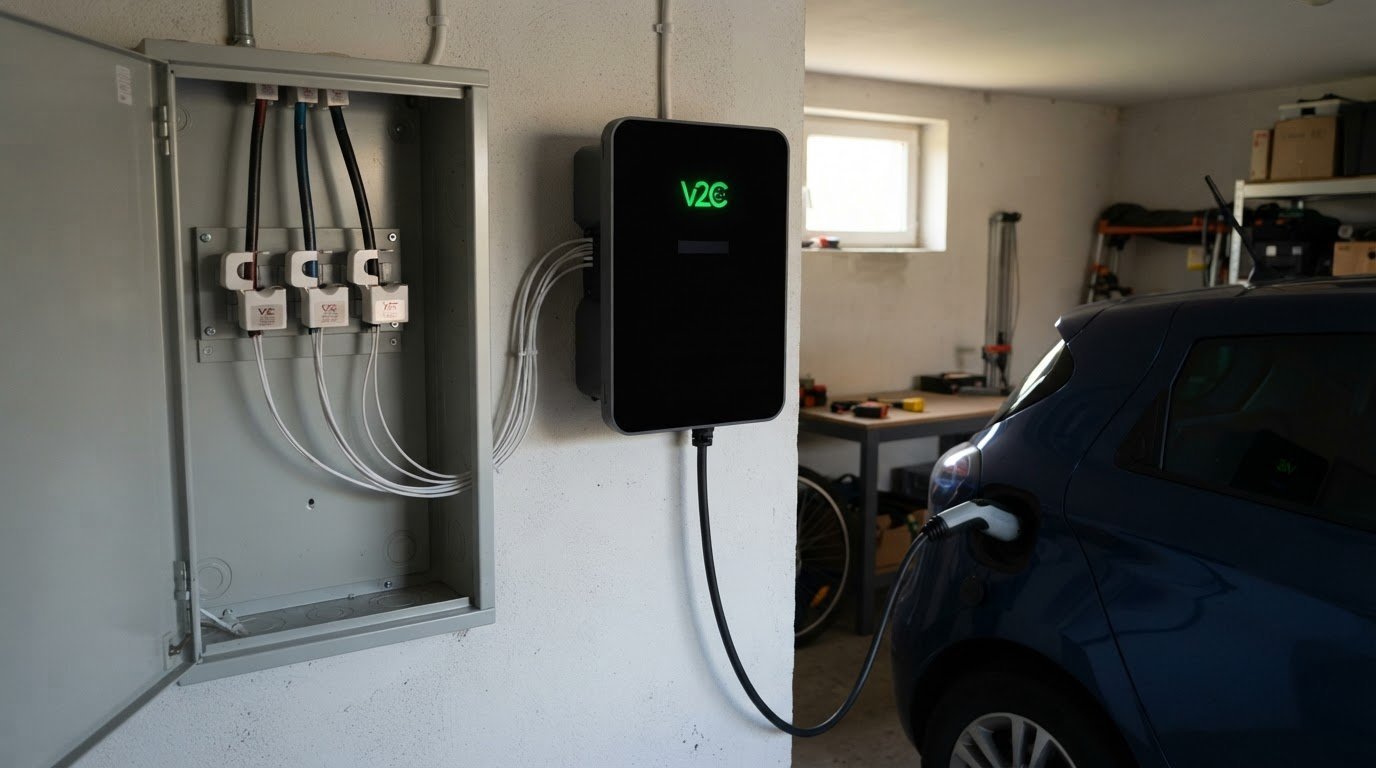
Charging Shop helps you move from comparing charging data to selecting hardware that fits your charging needs. If you’re weighing charger output against your vehicle and setup, consider the V2C Trydan 22kW or Alfen Single Pro Line 22kW as options to assess alongside your requirements. Their listed power ratings provide a starting point for comparing output, but your choice should also reflect your vehicle’s limits and the electrical supply.
A Personalised Charging Offer can help match your requirements with a suitable charging solution. CHRG Network Access is an option for station management. These offerings address different needs, so consider whether you need home charging hardware or network access to manage charging stations.
Contact Charging Shop to discuss which option best fits your charging requirements.
Choose the Setup That Fits Your Next Drive
Base your next decision on how you’ll use charging data, not just the figure on a specification sheet. Decide whether you need session-level visibility, a clearer record for cost estimates, or hardware suited to a particular vehicle and electrical setup. That priority gives you a practical way to compare an EV charger with a power meter against other charging options.
Charging Shop offers the V2C Trydan 22kW, V2C DENKA 20kW DC Wallbox, and Alfen Single Pro Line 22kW. Their different power ratings give you options to consider as you match charging equipment to your requirements. Focus on compatibility and the role you want energy tracking to play in your routine.
Ready to discuss your requirements? Contact Charging Shop for advice and take the next step toward a charging setup that suits you.
Frequently Asked Questions
What is an EV charger with a built-in power meter?
It’s a charger that measures electricity delivered to the vehicle and reports energy use, typically in kilowatt-hours. That reading describes charging consumption, not the vehicle’s battery charge level. For example, a session’s kWh total can help you compare charging sessions, while the vehicle’s battery percentage shows how full its battery is.
Which home EV chargers have built-in energy meters or kWh tracking?
Look for product specifications that explicitly describe built-in kWh measurement or session energy records. Charging Shop’s home options include V2C Trydan 22kW Solar – Display, 3 Phase, Type 2 cable, Black, and ABB Terra AC models. A charger’s power rating or app connectivity alone doesn’t establish that it records session-level kWh, so distinguish metering from other smart features.
Which EV chargers support time-of-use rates and energy monitoring apps?
V2C Trydan 22kW Solar – Display, 3 Phase, Type 2 cable, Black supports app control through V2C Cloud. ABB Terra AC models include peak-shaving charge scheduling to help reduce electricity costs. Scheduling and app monitoring serve different purposes: one can manage charging timing, while the other provides app-based access. An app alone doesn’t mean a charger automatically applies your utility’s time-of-use tariff.
