
 Deutsch
 Dansk
 Suomi
 Latviešu
 Lietuvių
 Norsk bokmål
 polski
 Русский
 Svenska

No products in the cart.
Uncategorized
Eco-friendly EV charger choices for lower-impact charging

01
Nov
Nov
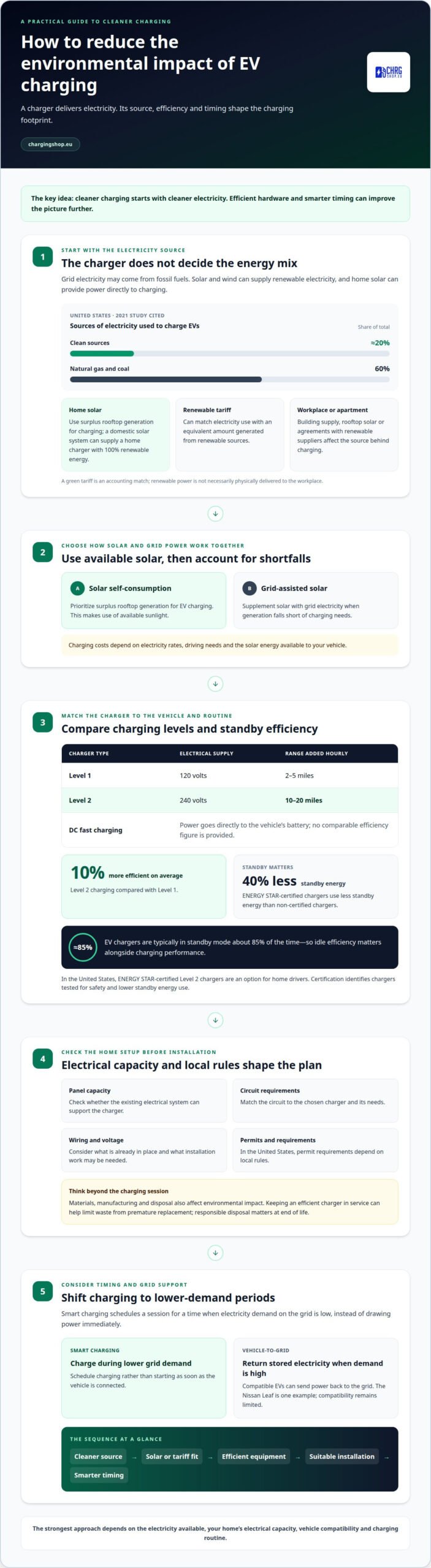
No EV charger automatically runs on renewable energy. An eco-friendly EV charger can reduce charging’s environmental impact when supplied by sources such as solar or wind, but the electricity mix matters most. A standard charger connected to a fossil-fuel-powered grid still uses electricity from that grid.
It makes sense to expect an electric vehicle to be cleaner to run, but your charging choices also shape its environmental footprint. This guide explains how electricity sources, home charging and off-peak scheduling affect that impact. You’ll learn where renewable tariffs, home solar and smarter charging can help, and how to choose an approach that fits your vehicle and routine.
Key Takeaways
- Look beyond the charger itself: the electricity supplying it determines whether charging is powered by cleaner energy.
- Compare grid electricity, renewable tariffs and home solar to understand which charging setup can lower your environmental impact.
- Consider standby energy use when choosing a home charger, since efficiency matters even when your vehicle isn’t plugged in.
- Use smart scheduling to shift charging to lower-demand periods and make better use of the electricity available to you.
Do all EV chargers use renewable energy?
No. An EV charger supplies electricity, but the grid or onsite generation determines its source. Solar and wind can provide renewable energy for charging.
In the United States, home drivers can choose ENERGY STAR-certified Level 2 chargers. ENERGY STAR certification identifies chargers tested for safety and lower standby energy use.
Level 1 uses a 120-volt outlet and adds 2 to 5 miles of range hourly. Level 2 uses 240 volts and adds 10 to 20 miles hourly. Level 2 charging is on average 10% more efficient than Level 1; DC fast charging delivers power directly to the vehicle’s battery, but no comparable efficiency figure is provided here.
Clean Energy Sources for EV Charging
Clean-energy charging uses renewable electricity, such as solar or wind, instead of power generated from fossil fuels. That distinction matters because a charger doesn’t determine the grid’s energy mix. In 2021, clean sources generated approximately 20% of electricity used to charge EVs in the United States, while natural gas and coal supplied 60% in the study cited. Home solar can supply charging directly.
Workplace Charger Energy Sources
Workplace chargers draw electricity from the building’s supply, which may come from the grid or onsite renewables. A green tariff can match the electricity employees use with an equivalent amount generated from renewable sources. This accounting approach supports renewable generation, even when wind or solar power isn’t physically delivered to the workplace. For drivers, the workplace’s energy arrangement affects the source behind each charging session.
Vehicle-to-grid charging adds another option: compatible EVs can send stored electricity back to the grid when demand is high. The Nissan Leaf is one example of a vehicle that can support this approach, although compatibility remains limited. This can make a parked EV a potential source of grid support, rather than only a source of electricity demand.
What is sustainable EV charging?
Sustainable EV charging combines cleaner electricity with efficient charging habits. Solar panels can supply a home charger, while wind power and renewable tariffs connect charging with cleaner generation. An eco-friendly charger’s impact depends on both its energy performance and its electricity source. The hardware alone cannot make grid electricity renewable.
Actual charging costs depend on electricity rates, driving needs and the solar energy available to your vehicle.
Solar self-consumption can prioritize surplus rooftop generation for EV charging. A grid-assisted approach supplements solar when generation falls short. The first makes use of available sunlight; the second helps meet charging needs when solar output is limited. A domestic solar system can supply a home EV charger with 100% renewable energy. Charging with excess solar can reduce environmental impact and charging costs.
Compare standby energy use and charging losses across charger models. ENERGY STAR-certified EV chargers use 40% less energy in standby mode than non-certified chargers. EV chargers are typically in standby mode about 85% of the time, so idle efficiency matters alongside charging performance.
In the US, home installation permits and electrical requirements depend on local rules and existing electrical capacity. Key planning factors include panel capacity, circuit requirements, wiring and charger voltage. These determine whether your home’s electrical setup can support the chosen charger and what installation work is needed.
Federal, state, and utility incentives vary by location, equipment eligibility, property type, and project scope. Match your charger choice to your home’s power and renewable-energy plan with a personalised charging offer.
Apartment buildings can use rooftop solar panels or agreements with local renewable energy suppliers to charge electric cars with renewable energy. The ENERGY STAR brand is recognized by over 90% of U.S. consumers.
Environmental considerations for home charging
Home charging’s footprint depends on the electricity used and the equipment’s full life cycle. ENERGY STAR certification provides a measurable efficiency benchmark.
If all EV chargers sold in the United States met ENERGY STAR requirements, 280 million pounds of greenhouse gas emissions would be avoided, according to ENERGY STAR.
Charger Materials, Manufacturing, and Disposal
Charger materials, manufacturing and disposal all affect environmental impact. Metal and electronic components require resources and energy to produce, and manufacturing adds further energy use. At the end of its life, a discarded charger can become electronic waste, leaving recoverable materials out of use. For homeowners, choosing an efficient charger and keeping it in service can help limit waste from premature replacement. Responsible disposal also matters when equipment reaches the end of its useful life.
Choosing and Installing an Eco-Friendly Home Charger
Choose a charger based on efficiency, vehicle compatibility and your home’s electrical capacity. ENERGY STAR certification provides a clear efficiency marker; then match the charger level to your needs. Plan for the circuit, wiring and available electrical capacity to determine whether your existing setup can support the charger or needs changes. In the United States, permit requirements depend on local rules, so account for the requirements where you live.
Think beyond the equipment. Electric vehicles have a lower lifetime carbon footprint than gasoline-powered vehicles, including emissions from manufacturing, charging and driving. The electricity supply still affects charging emissions, so pairing a home charger with renewable power can further reduce its impact.
Cleaner vehicle operation can also benefit the surrounding community. EVs have no exhaust emissions, and reduced harmful particles and chemicals can improve local air quality, including for people with asthma or allergies. Consider these local effects alongside the charger’s production and disposal when weighing its overall impact.
Smart charging and off-peak scheduling
Smart charging schedules an EV session for a time when electricity demand on the grid is low. Instead of drawing power immediately, the vehicle or charger follows a set charging window. This shifts demand away from busier periods and can reduce power expenses when off-peak rates apply. Lower demand does not automatically mean renewable electricity, so timing and energy source remain separate considerations.
Overnight charging is a practical example: plug in after arriving home, then set charging to begin later. Ideally, EV owners can charge overnight at home or wherever they park. A scheduled session makes use of that parked time while preparing the vehicle for its next trip. Set the finish time around your departure instead of charging as soon as you arrive.
Smart scheduling matches charging with the grid’s demand pattern or a chosen electricity price window. The right window depends on local utility rates and your routine. If your household uses more electricity in the evening, shifting vehicle charging later can also help avoid overlapping demand at home. Review the schedule when your work hours or driving needs change.
A home battery adds another option. Integrated with EV charging, it can let owners charge during local blackouts and avoid utility power during periods of high energy demand. This depends on having stored energy available, so household demand and the battery’s charge level affect how much power can go to the car.
Start with your parking routine, then choose a charging window that meets your next-trip needs. Compare the available schedule controls with your electricity plan, and adjust the timing when rates or daily routines change. For a setup matched to your charging requirements, explore a personalised charging offer.
Charging an EV during off-peak hours can help reduce power expenses. The benefit depends on choosing a window that matches your electricity plan, rather than assuming every later session costs less. Check the rate window and set the vehicle or charger to begin within it, while leaving enough time to reach the desired charge before departure.
Keep the schedule aligned with your next trip and revisit it when routines or rates change. If the charging window shifts, you can still avoid starting a session as soon as the vehicle is parked.
Charging Shop: V2C Trydan 22kW
Charging Shop offers charging hardware and a Personalised Charging Offer to help match your requirements with a suitable option. If you’re comparing equipment for a home or commercial charging setup, consider the V2C Trydan 22kW, V2C DENKA 20kW DC Wallbox, and Alfen Single Pro Line 22kW. Each has a distinct charging format, so your vehicle, charging environment, and electrical setup all matter when narrowing the choice.
A charger alone doesn’t determine whether your electricity comes from renewable sources. Pair your hardware choice with an energy supply and charging schedule that suit your needs. Contact Charging Shop to discuss a Personalised Charging Offer for your setup.
Make your next charging choice count
Your charging setup can evolve as your vehicle, electricity plan or parking routine changes. Treat the charger as one part of a longer-term decision: choose equipment that fits your needs now, then align charging habits with cleaner electricity when it’s available. That keeps an eco-friendly EV charger choice practical, not just a product label.
Charging Shop offers the V2C Trydan 22kW, V2C DENKA 20kW DC Wallbox, and Alfen Single Pro Line 22kW. Compare these options against your charging environment and vehicle requirements, then use a Personalised Charging Offer to shape your next step.
Contact Charging Shop for charging advice and move forward with a charging setup that suits your plans.
Frequently Asked Questions
How much do eco-friendly home EV chargers and installation cost?
There’s no single total: equipment and installation work both affect the cost. Key factors include charger type, electrical panel capacity, cable routing and whether your home needs circuit upgrades. Two homes choosing the same charger may need different installation work. Charging Shop sells EV charging hardware, while installation is a separate part of planning.
Can EV chargers use solar panels or renewable energy?
Yes. A home charging setup can use rooftop solar, while a renewable tariff can match electricity consumption with renewable generation. For example, an apartment building might use shared rooftop panels or an agreement with a renewable supplier. These arrangements work differently: onsite solar supplies the building directly, while a tariff accounts for renewable electricity generated elsewhere.
How can smart charging reduce emissions and electricity costs?
Smart charging can shift a session to a lower-demand period, which may reduce electricity expenses if your rate plan charges less then. Emissions depend on the electricity mix at that time, so a cheaper window isn’t automatically cleaner. Compare your utility’s time-based rates with your usual parking schedule, then choose a charging window that fits both.
How do charger standby power use and charging losses compare by model?
ENERGY STAR-certified chargers use 40% less standby energy than non-certified chargers; no model-specific charging-loss comparison is provided.
