
 Deutsch
 Dansk
 Suomi
 Latviešu
 Lietuvių
 Norsk bokmål
 polski
 Русский
 Svenska

No products in the cart.
Uncategorized
Multi-Port EV Charging Station Power and Charging Speed
24
Oct
Oct
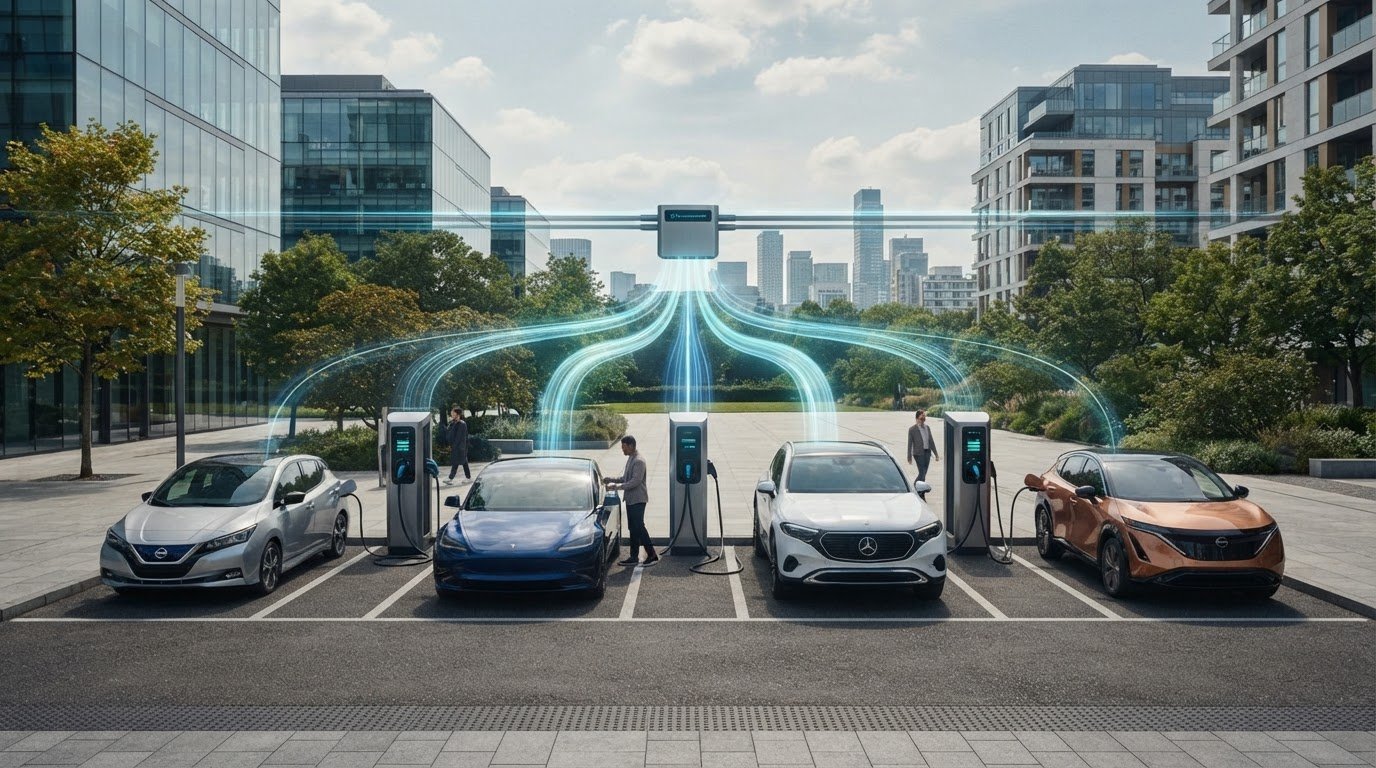
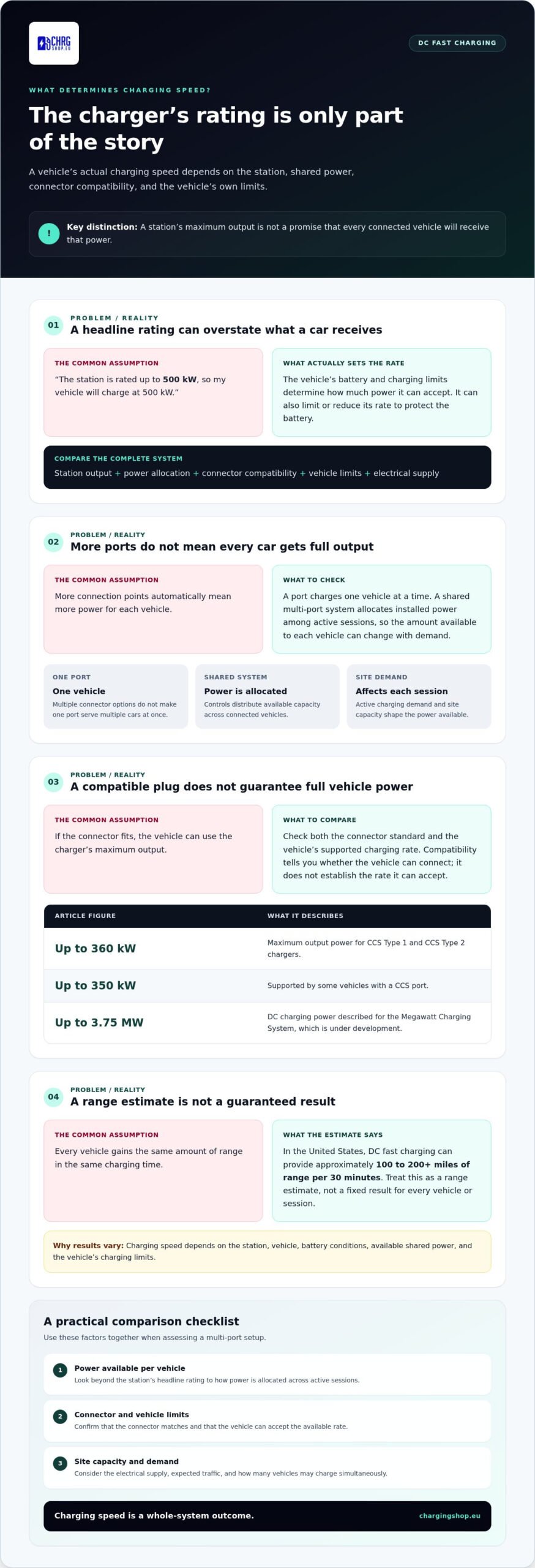
More ports do not automatically mean faster charging. A multi-port EV charging station can serve several vehicles, but each independent port charges one vehicle at a time. The speed each vehicle receives depends on the station’s available power, how that power is shared, connector compatibility, the vehicle’s charging limits, and the electrical supply serving the station.
It is easy to focus on a charger’s headline power rating, but that figure alone does not show what happens when several vehicles plug in together. Power management can divide capacity among active ports, and a vehicle may draw less power than the station can supply. Charging speed depends on the whole system, not just the number on the charger.
This guide explains how ports differ from connectors, how power sharing affects simultaneous charging, and why the electrical supply and vehicle limits matter. Use these factors to compare multi-port setups and understand the charging speed they can deliver in practice.
Key Takeaways
- Compare the power available to each vehicle, not just the station’s headline output.
- Match the connector to the vehicle, and remember that multiple connector options do not mean one port can charge multiple vehicles at once.
- Account for power sharing: simultaneous charging can change how much capacity each connected vehicle receives.
- For AC Level 2 charging, consider the electrical service and the vehicle’s onboard charging limit when estimating speed.
- Use the charging setup that fits your site’s power supply, charging demand, and vehicle mix.
DC fast charging speed and power output
DC fast charging sends power directly to an EV’s battery, bypassing its onboard AC charger. A DC fast-charging station can have outputs up to 500 kW, but the vehicle’s battery and charging limits determine how much it actually receives. In the United States, DC fast charging can provide approximately 100 to 200+ miles of range per 30 minutes. Treat that as a range estimate, not a fixed result for every vehicle or charging session.
CCS Type 1 and CCS Type 2 chargers can each provide maximum output power of 360 kW. Some vehicles with a CCS port support DC charging up to 350 kW, so connector compatibility alone doesn’t mean a vehicle can use the charger’s full output. CCS cables delivering more than 200 amps require liquid cooling. CCS Type 1 can deliver up to 500 amps and 1000 volts DC, while the vehicle’s own charging capability remains a separate limit.
AC charging works differently from DC fast charging. An AC station supplies alternating current, which the vehicle’s onboard charger converts for its battery. A DC fast charger supplies direct current to the battery, making it useful when drivers need a rapid top-up. Charging speed still depends on the station, vehicle, and battery conditions. During DC charging, the vehicle can limit or reduce its rate to protect the battery.
A multi-port DC fast-charger design can use Power Electronics Building Blocks to scale total output to several megawatts. Its control system can connect multiple EVs to one charging unit and allocate installed power across active sessions. This can make better use of site capacity, but it does not mean every connected vehicle receives the unit’s full rated output at once. The allocation strategy and site demand determine the power available to each session.
Compared with installing separate chargers, a shared multi-port unit can serve several vehicles through one system and distribute available power as demand changes. Separate chargers give each vehicle its own charging unit, while a shared system pools its installed capacity for active sessions. The right fit depends on expected traffic, simultaneous charging demand, and the electrical supply available at the site.
Installation, maintenance, and operating costs depend on charger capacity, site electrical work, cable cooling, and how the station is used. Key risks include demand exceeding the available electrical supply, connector mismatch, and a vehicle charging below the station’s rated output. Assess these factors when evaluating a site design: the charger’s headline kilowatt rating does not describe the whole operating picture.
For a DC fast-charging network, connector choice affects which vehicles can use a station, while power allocation affects the experience after they connect. CCS Type 1 and Type 2 are each rated up to 360 kW, and the Megawatt Charging System is under development for DC charging up to 3.75 MW. Compare connector compatibility, vehicle limits, and shared capacity together to understand the speed a network can deliver.
Charging station, port, and connector terminology
A charging station is the equipment that delivers electricity; a port is the vehicle connection point; and a connector is the plug and cable end. These terms matter because one port can have multiple connector options but still charge only one vehicle at a time. A station listing several connectors, for example, does not necessarily provide separate charging capacity through each one.
Connector type determines whether a vehicle can physically connect and which charging method it supports. J1772 is the AC charging port for non-Tesla vehicles. CCS1 and CHAdeMO are DC fast-charging connectors for non-Tesla vehicles, while NACS supports both AC and DC charging. The CCS Combo port combines a J1772 connector with two additional DC pins, supporting both AC and DC charging through a shared port.
For North American AC charging, SAE J1772 Type 1 has five pins and supports up to 80 amps using 240-volt input. Its maximum power is 19.2 kW at 208/240 volts. Mennekes Type 2, common in other markets, has seven pins and supports a maximum output current of 32 amps. A Mennekes Type 2 connector’s power output depends on the electrical configuration. Match the connector and electrical configuration to the vehicle and site.
Before travelling, use a charging app to search by connector type and review a station’s listed ports and availability. For example, a driver with a CHAdeMO vehicle should filter for CHAdeMO-compatible stations rather than assume every DC fast-charging location has that connector. Availability can change as vehicles arrive or leave. Connector details help with route planning, while the station’s current status shows whether a port is usable.
Permits, electrical codes, and accessibility rules depend on the site’s jurisdiction and project scope. Design the installation around applicable local requirements, the electrical supply, and access to the charging equipment. Purchase and installation costs vary with charger capacity, port count, site electrical work, and any required service upgrades. These project factors shape the total cost, not connector type alone.
U.S. incentives, tax credits, and utility rebates depend on location, program rules, applicant, and project details. To choose equipment for a specific site, compare the vehicles’ connectors, expected charging demand, available electrical service, and user access needs. Then align the station design with local permitting and accessibility requirements. A range of EV charging options can help you explore equipment for different charging environments.
CCS connectors share pins between AC and DC charging connections. The proposed multiport charger is intended to support conventional and newer EV standards, including CCS and CHAdeMO. CHAdeMO charging can support up to 400 amps.
Charging control and power utilization
A multi-port EV charging station must manage a shared resource: the power available to its ports. Its control system coordinates connected vehicles with the station’s capacity and the site’s electrical supply. Connecting multiple EVs to one charging unit can make better use of installed power, rather than leaving capacity idle whenever a port is unused.
Power sharing determines how capacity is distributed during busy periods. When demand rises across charging ports, the system can allocate available output among active sessions. Each vehicle’s actual charging rate also depends on its battery and charging limits, so the station’s total output does not translate into the same rate for every driver. In a parking area with staggered arrivals, this control helps use capacity as demand changes.
For site planning, distinguish total capacity from the power available to each connected vehicle. A useful design review considers the electrical supply, expected overlap between charging sessions, and how drivers use the location. A workplace with longer parking periods has a different demand pattern from a public fast-charging stop. These patterns help determine how charging infrastructure can use power effectively, without assuming every port always draws maximum output.
Energy storage can add another layer of control. One proposed charger design places storage in the charger’s inner DC grid to buffer demand on the AC grid and reduce energy costs. The same proposal targets Grid-to-Vehicle power-conversion efficiency greater than 98%. That figure is a target for the proposed charger, not a general efficiency claim for every station or installation.
Storage may also support grid services. The project proposes that integrated storage could let a charging station participate in the network ancillary service market. In practical terms, stored energy can help manage the relationship between charging demand and the grid. Its value depends on the site’s operating pattern and system design, not simply on adding more charging ports.
For America’s growing charging infrastructure, control decisions shape how installed capacity performs across a site. Compare the station’s total power, the electrical supply available to it, and the expected number of simultaneous sessions. Then consider whether power allocation alone meets demand or integrated storage suits the project. These factors show whether a multi-port layout uses the electrical supply effectively, especially when several vehicles need power at once.
Keep the objective clear: serve connected vehicles while making practical use of site capacity. Power sharing coordinates sessions, storage can buffer grid demand, and conversion efficiency describes how effectively input power becomes vehicle charging power. Assessing these functions together gives operators a more useful view of charging performance than counting ports alone.
AC Level 2 charging speed and electrical service
AC Level 2 charging supplies alternating current for an electric vehicle’s onboard charger to convert. Charging speed depends on the equipment, electrical service, and vehicle limits.
AC Level 2 Charging Speed
In the United States, Level 2 charging provides approximately 25 miles of range per hour. That estimate helps drivers compare charging options, but it isn’t a fixed rate for every vehicle. The vehicle’s onboard charging circuit limits its AC charging rate, so a higher-output station cannot make every model charge faster.
A Level 2 charging unit can range from 2.9 to 19.2 kW of output. Most residential Level 2 chargers operate at up to 30 amps and deliver 7.2 kW. Those figures describe equipment capacity, not a guaranteed rate at the battery. The vehicle’s onboard charger and the supplied electrical power both affect the rate it can use.
For example, a vehicle with a lower AC charging limit may not use all the power a higher-rated unit can offer. A multi-port setup adds another factor: the available electrical supply must support demand across active ports. Compare the station’s output with the vehicles’ AC limits to estimate whether its capacity can deliver faster charging in everyday use.
Electrical Capacity and Site Requirements
A multi-port EV station’s electrical capacity is the power its site service can supply to charging equipment. It matters because each active charger draws from that shared site capacity. In typical residential applications, Level 2 equipment uses 240 V service; typical commercial applications use 208 V service.
Level 2 equipment can operate at 40 to 80 amperes, while most residential chargers operate at up to 30 amperes. Most residential Level 2 chargers require a dedicated 40-amp circuit to comply with National Electric Code Article 625. These figures describe common residential equipment and circuit requirements; commercial multi-port designs must account for their own service and load.
What electrical capacity and site requirements are needed for a multi-port EV charging station? The site needs electrical service suited to the chargers and the demand expected across active ports. For Level 2, consider whether the service is 240 V residential or 208 V commercial, then account for charger output and vehicle charging limits.
Before selecting equipment, compare the electrical supply, the number of ports expected to operate together, and the AC limits of the vehicle models that will use them. A site with several active chargers must allocate its available capacity across those loads. This comparison shows whether the supply can support the intended charging pattern or whether the design needs a different balance of output.
How many vehicles can multi-port EV charging stations charge at once?
The number of vehicles charging simultaneously is limited by the number of independent ports. One port supplies power to one vehicle at a time, even if the station offers multiple connector types. A station with several connector choices on one port still serves one vehicle through that port, not one vehicle per connector.
Count usable ports, not plugs or connector options, when estimating simultaneous charging. For example, a hypothetical station with four independent ports could connect four vehicles at once, provided enough power is available for those sessions. A unit with one port and two connector choices can serve only one vehicle at a time through that port. This distinction prevents overestimating capacity based on product photos or connector lists.
Port count tells you how many vehicles can connect, not how quickly each one charges. A charging unit can connect multiple EVs to make better use of installed power, while its control system allocates available power across active sessions. If several vehicles arrive together, each may receive a different share than a vehicle charging alone. The station’s total output and each vehicle’s charging limit also shape the result.
Consider a workplace with multiple parking bays. Drivers may arrive at different times and stay for different periods, so the busiest overlap matters more than the total number of daily users. At a public charging site, vehicles may arrive together, increasing simultaneous demand. In either case, match independent ports to the number of vehicles likely to charge at once, then account for the electrical capacity available to serve them.
Connector compatibility affects which vehicles can use each port. A multi-connector port does not create extra charging capacity; it offers connection choices for compatible vehicles. One driver may need a specific connector, while another vehicle uses a different standard. When planning access for a mixed fleet, distinguish connector options from ports that can be used simultaneously.
To size a charging layout, estimate peak simultaneous arrivals, identify the connectors those vehicles need, and compare demand with the site’s available power. Then decide whether users need dedicated access or can share capacity as sessions change. This approach focuses on actual charging activity, not just the number of visible cables. It also clarifies whether the design can support the site’s busiest periods.
Want a setup tailored to your charging needs? Explore a Personalised Charging Offer to consider equipment options for your site.
Check connector choices against vehicle guidance. EV owners should use only adapters approved by their vehicle manufacturer for their specific model. An adapter does not add an independent port or increase the number of vehicles that can charge at once; it addresses connection compatibility only when approved for that vehicle. This keeps connector availability separate from the station’s capacity to serve simultaneous sessions.
Even when several ports are active, each vehicle’s charging rate may differ. During DC charging, the vehicle’s battery can limit the rate, which may also be reduced to prevent battery damage. Port count indicates how many vehicles can connect, not the rate each will receive. Consider both the available ports and charging limits when assessing how well a station can serve vehicles simultaneously.
Charging Shop: V2C Trydan 22kW
Charging Shop helps you move from comparing charging requirements to exploring suitable EV charging hardware. The V2C Trydan 22kW is one option to consider when evaluating charging equipment for your setup. Charging Shop offers the V2C DENKA 20kW DC Wallbox among its curated selection of EV chargers.
Choose equipment based on your vehicle’s charging needs, the available electrical supply, and how the station will be used. If you are weighing different configurations, Charging Shop’s Personalised Charging Offer can help align your equipment choice with your project. It is a practical next step after assessing ports, connectors, power sharing, and site capacity.
Contact Charging Shop or visit chargingshop.eu to explore your options.
Make Your Charging Plan the Next Step
Turn your requirements into a purchasing brief before choosing equipment. Note how drivers will use the site, which vehicle types it must serve, and what the charging setup needs to support as demand changes. This gives your multi-port EV charging station decision a practical foundation, rather than leaving it as a product checklist.
Charging Shop offers the V2C Trydan 22kW, V2C DENKA 20kW DC Wallbox, and Alfen Single Pro Line 22kW. Compare these options against your project’s needs, then use a Personalised Charging Offer to shape the selection around your charging requirements.
Ready to explore equipment for your setup? Contact Charging Shop about EV charging. A clear brief makes it easier to move from planning to a solution that fits your site.
Frequently Asked Questions
What is a multi-port EV charging station?
A multi-port EV charging station is equipment designed to connect multiple vehicles through separate charging ports. For example, an apartment parking area can use several ports so residents charge in assigned spaces rather than moving one shared charger between cars. Port count describes how many vehicles can connect at once; the station’s power management and each vehicle’s charging capability affect the service each receives.
How does dynamic load management work for multi-port EV chargers?
Dynamic load management adjusts charging power as demand on the site changes. For example, if a building’s other electrical equipment draws more power, the system can reduce charger output to stay within the site’s available capacity. As that demand falls, more power can be made available for vehicle charging. This coordination helps balance EV charging with the building’s overall electrical load.
