
 Deutsch
 Dansk
 Suomi
 Latviešu
 Lietuvių
 Norsk bokmål
 polski
 Русский
 Svenska

No products in the cart.
Uncategorized
Monetizing EV Chargers for Business Through Charging Fees and Customer Visits
22
Oct
Oct
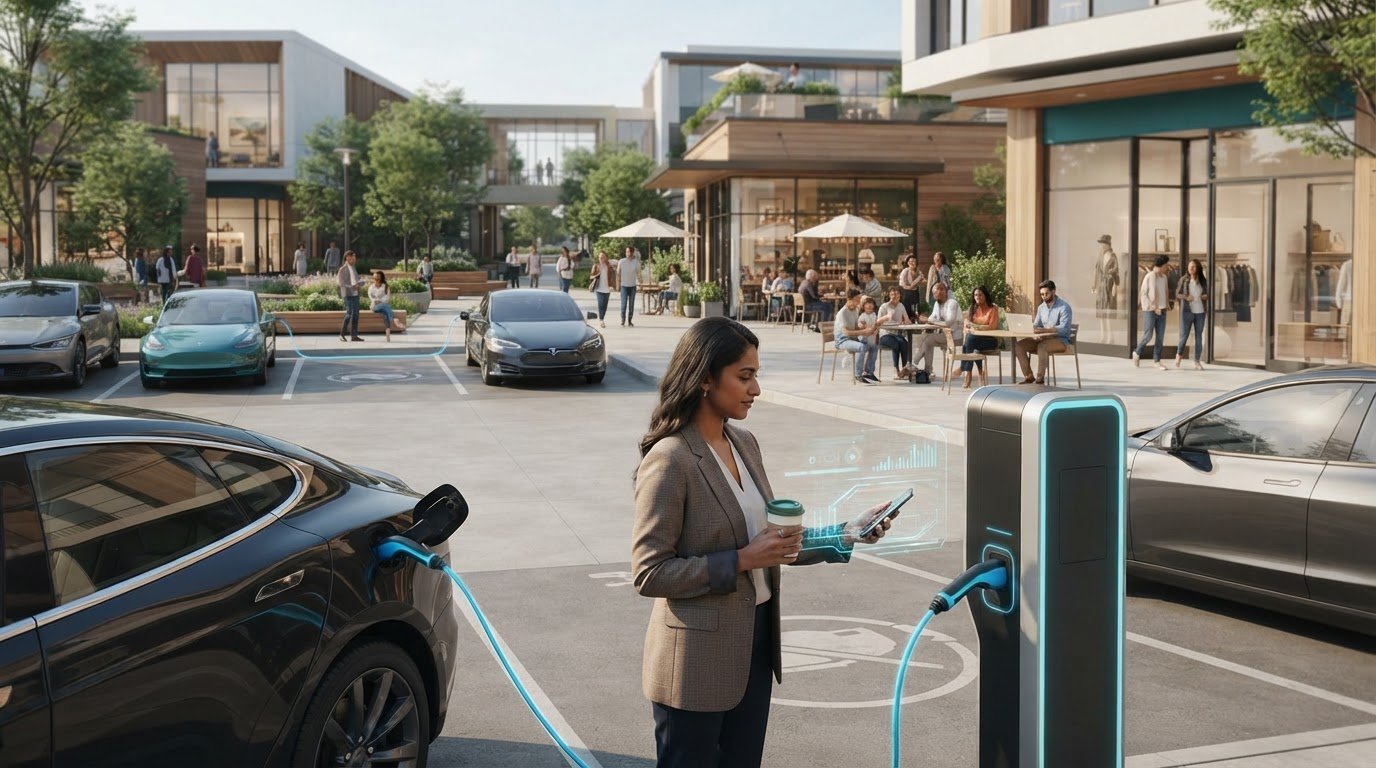
Charging fees are only one way to earn from an EV station. Monetizing EV chargers for business can also mean giving customers more time to shop, dine, or use on-site services while their vehicles charge. The average EV driver spends twenty minutes at a charging stop, creating an opportunity to link charging with a useful customer visit.
Look beyond the charger itself: your revenue model should fit how long drivers stay and what they need while they wait. This guide explains how businesses can set fees by energy use, time, session, or subscription, and how longer visits may support additional sales.
You’ll also learn how permits, utility coordination, incentives, payment options, and ongoing station management shape the business case. Use these factors to assess whether charging revenue, more customer visits, or a combination of both best fits your location.
Key Takeaways
- Choose a charging-fee model that fits your site, such as pricing by energy used, charging time, session, or subscription.
- Pair charger speed with how long customers typically stay, then connect charging access to useful on-site amenities or loyalty benefits.
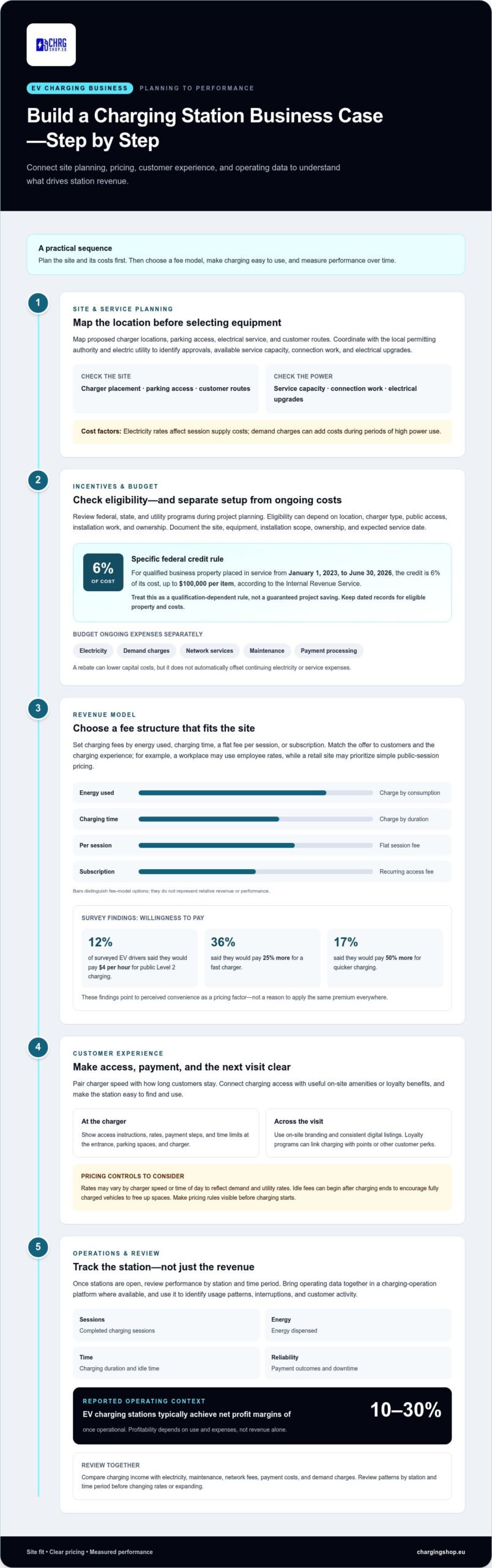
- For qualified business property placed in service from January 1, 2023, to June 30, 2026, the credit is 6% of its cost, up to $100,000 per item, according to the Internal Revenue Service.
- Track station use, payments, operating costs, and performance by charger and time period to understand what drives revenue.
- Compare network and payment options for customer access, rate management, transaction handling, and station reporting.
Permits, utility coordination, rebates, and incentives
Careful site planning can help prepare an EV charging station to generate revenue. Map proposed charger locations, parking access, electrical service, and customer routes. Then coordinate with the local permitting authority and electric utility. Their review can identify required approvals, available service capacity, connection work, and electrical upgrades before you select equipment. These factors shape upfront costs and the station’s path to operation.
Electricity rates, demand charges, and utility programs directly affect operating costs and margins. Energy rates determine what each charging session costs to supply, while demand charges can add costs during periods of high power use. Utility programs may offer incentives or rates that reward certain usage patterns. Aligning charging schedules with those terms can improve profitability.
Review incentives during project planning. Look for federal, state, and utility programs that may reduce eligible equipment or installation costs. Rules vary by location and project, so document the site, equipment, installation scope, ownership, and expected service date. Public stations and workplace chargers may face different conditions. Match each application to the specific project rather than assuming every incentive applies.
For qualified business property placed in service from January 1, 2023, to June 30, 2026, the credit is 6% of its cost, up to $100,000 per item, according to the Internal Revenue Service. Treat this as a specific federal credit rule, not a guaranteed project saving. Keep dated records for eligible property and costs, and assess qualification before including a credit in financial projections.
Installation incentives can reduce initial outlay, but operating expenses continue after opening. Track electricity, network services, maintenance, payment processing, and demand charges as separate budget lines. If a business offers charging for free, charging and maintenance costs may be deductible as business expenses. This can support a customer amenity, but compare the operating expense with the value of visits and repeat business.
Eligibility matters as much as the incentive amount. Check whether a program covers the site’s location, charger type, public access, installation work, or ownership model. Note deadlines and required documents, then coordinate utility approval and incentive paperwork with project planning. A rebate can lower capital costs, but it does not automatically offset ongoing electricity or service expenses.
Promote the station once the customer experience is ready. Add clear parking signs, explain access and payment, and announce charging through newsletters, social posts, or a launch event. A loyalty program can link charging with points or other customer perks. For example, a retailer could reward visits while drivers charge, then track whether the offer brings repeat visits and sales.
Ongoing monitoring and station management
Once stations are open, track performance by station and time period. Review completed sessions, energy dispensed, charging duration, payment outcomes, and downtime. These measures show whether traffic converts into paid use and where interruptions affect profitability. For example, compare weekday lunch periods with evening demand before changing rates or site hours.
Use a charging-operation platform to bring operating data together. Platforms can provide reports by station and time period, as well as data about charger users. Use reports to see which locations attract repeat drivers, when demand peaks, and whether users are employees, visitors, or public customers. Keep utilization and maintenance records together to make operating patterns easier to identify.
Set prices to suit the charging experience, then review them against actual usage. Businesses can charge by energy consumed, charging time, a flat fee per session, or subscription. They can also offer employees or loyalty-program members lower rates than the general public. Match the model to your site: a workplace may benefit from employee rates, while a retail station may prioritize simple public-session pricing.
Charging speed and timing can also shape rates. Businesses can adjust prices by charger speed and time of day to reflect demand and changing utility rates. Idle fees, which begin after charging ends, can encourage fully charged vehicles to free up spaces. Make pricing rules visible before a driver starts, then review session data after rate changes to see how traffic responds.
Customer research can help frame the offer. Twelve percent of surveyed EV drivers said they would pay $4 per hour for public Level 2 charging. Thirty-six percent said they would pay 25% more for a fast charger, while 17% would pay 50% more for quicker charging. These findings point to perceived convenience as a pricing factor, not a reason to apply the same premium everywhere.
Make the station easy to find and use. Put signs at the site entrance, parking spaces, and charger showing access instructions, rates, payment steps, and time limits. Add on-site branding that connects charging with your business, and keep the message consistent across digital listings and customer communications. Clear instructions reduce confusion at the charger and help visitors know where to go next.
Profitability depends on use and expenses, not revenue alone. EV charging stations typically achieve net profit margins of 10% to 30% once operational. Track electricity, maintenance, network fees, payment costs, and idle time alongside charging income. Compare results across stations before expanding or changing a charging solution. A tailored charging plan can help align equipment and operation with the site’s commercial goals.
For a practical next step, explore commercial charging options suited to your intended station setup.
How Do I Collect and Track Revenue?
Collect revenue through clear prices, accessible payment options, and accurate session records. Compare income with operating costs before deciding whether EV charging infrastructure is a sound investment.
Revenue by Charger Level
Revenue by charger level means comparing income from slower Level 2 charging with faster DC charging. Actual income depends on utilization, pricing, electricity costs, and demand charges.
Payment Collection and Tracking
Payment collection combines each customer transaction with records showing what each charging session earned. Businesses can charge by energy consumed, time, a flat session fee, or subscription. A charging network or payment platform can process transactions and generate reports by station and time period. Compare payments collected with energy dispensed, refunds, network charges, and utility bills. This makes discrepancies visible and helps identify locations that generate consistent revenue.
Some charging stations can also earn revenue from advertising on charger screens. Treat advertising as a separate stream: identify the audience, available screen space, and suitable local promotions, then track campaign income separately from charging payments. For example, a public parking site could feature nearby dining or retail offers. Show charging access and payment instructions first, so promotions do not obscure information drivers need.
Build a monthly operating report with income and expenses separated by station. Compare expenses with gross charging revenue, then account for payment processing, demand charges, and advertising proceeds where applicable.
Key risks include maintenance interruptions, low utilization, and potential liability involving equipment or site access. Include routine inspections, clear operating instructions, and a process for recording faults in station management software.
Calculate payback by dividing the initial investment by annual net cash flow, then estimate ROI by comparing net returns with total investment. Include equipment, installation, electricity, maintenance, network fees, and payment costs. Market estimates put payback for well-located, consistently used Level 2 stations at 3 to 5 years, while fast-charger payback is estimated at 2 to 3 years, especially with subsidies or fleet deals.
Revenue from charging fees and increased customer dwell time
Charging revenue can come from session fees and additional customer spending during a charging visit. Retail, hospitality, and workplace sites can attract EV drivers by matching charger speed, location, and amenities to their visit.
Sites near shops, restaurants, workplaces, and hotels can capture charging demand. Promote the station with visible signs and customer offers, then track sessions and sales by time window to see which strategies build utilization.
Matching Charger Speed to Visits
Matching charger speed to visits means choosing charging power that fits customers’ typical parking time. Level 2 AC charging suits businesses where drivers park for an hour or more; DC fast charging fits locations where visits last under an hour. EV drivers may stay 15 to 30 minutes or longer, compared with about five minutes for a gasoline fill-up. A workplace or hotel can suit Level 2, while a quick-stop retail site may benefit from DC fast charging.
Longer visits can create more opportunities for purchases, but the effect depends on what customers can do while charging. The average EV driver spends twenty minutes at a charging stop. Convenience Store News reported that convenience-store charging customers often spend more in-store than the average fuel customer. A major retailer found that adding EV charging tripled customers’ time in its store. Treat these examples as potential advantages, then compare results at your own site.
Charging Data and Customer Spending
To link charging data with customer spending, compare station sessions with sales patterns across matching time periods. This helps you assess whether charging visits coincide with retail purchases or tenant activity. For example, compare session starts and charging duration with store sales during the same periods. Review totals by daypart and location, and measure a loyalty offer separately. This shows which customer strategies accompany stronger traffic without assuming every charging session leads to a sale.
Make the charging stop useful. Clean facilities, good food, reliable Wi-Fi, and fast chargers can give drivers reasons to stay on-site or return. Free charging may attract visits, while paid charging can generate direct revenue. Compare the value of additional retail activity with electricity and operating expenses before choosing an approach.
Location and Utilization Strategies
Location and utilization strategies focus on placing chargers where drivers already park and promoting them to likely visitors. Retail centers, hospitality sites, workplaces, and residences suit different visit patterns. Pair Level 2 with longer stays and DC fast charging with shorter stops. Use launch announcements, newsletters, social posts, and on-site signs to make the station visible. Then review station use by time period and refine promotions around quieter periods.
Set an offer that fits the visit: a retailer could link charging access with loyalty points, while a hotel could present charging as an amenity. Track sessions, dwell time, and sales over the same periods. If traffic rises but sales do not, adjust the customer offer or on-site experience before expanding the charging setup.
What EV charging networks and payment platforms support commercial sites?
A charging network connects commercial stations with services for driver access, payment handling, and operating reports. A payment platform collects session charges and organizes transaction records. Together, these tools help a business manage public access, monitor station activity, and reconcile charging income.
Match the system to your site
Start with the operating model. A workplace serving employees has different access needs from a retail car park open to the public. Decide who can use each station, which fees apply, and how drivers will start and pay for sessions. Then choose a network and payment setup that supports those rules. For example, a site could offer one rate to employees and another to public users.
Check how the system handles pricing. Businesses can charge by energy consumed, time, a flat fee per session, or subscription. Some also set rates by charger speed or time of day. These options can align payment collection with the business model, but clear pricing matters. Show drivers the applicable rate and session terms before charging begins.
Review payment and reporting functions
Payment platforms can support transactions and organize records for revenue tracking. Look for reports that separate activity by station and time period, then reconcile those totals with utility bills and business records. Charging-operation platforms can also report demographic data about charger users. Use those reports to compare usage patterns across locations and understand which stations attract distinct user groups.
Build a recurring review around four measures: sessions, energy dispensed, payment totals, and downtime. Compare the same periods across stations. For example, if one site records sessions but lower payment totals, inspect its rates, payment steps, and transaction records. If revenue falls alongside downtime, station availability may be limiting use. A monthly review makes these patterns easier to spot and act on.
Budget for network expenses separately from electricity and maintenance. Include those fees in the operating report, then compare them with charging income and other station costs. This helps reveal whether network services meet the site’s payment and reporting needs at a sustainable operating cost.
Keep the driver experience straightforward. Post payment instructions beside each charger, explain session pricing, and provide a clear way to handle failed transactions. Review customer questions and payment issues alongside station reports. If the setup needs to support a tailored commercial charging model, explore commercial charging options for your site.
Charging Shop: V2C Trydan 22kW
Charging Shop can help you move from revenue planning to choosing charging hardware. The V2C Trydan 22kW is one option to consider for your commercial setup. For a different charging requirement, compare available options against your site’s needs. A Personalised Charging Offer can help you consider which listed option best aligns with your site and operating plans.
Start with the business case: expected dwell time, charging access, pricing approach, and station management needs. Use those priorities to narrow the equipment choice, rather than selecting by power rating alone. Contact Charging Shop to explore the available options for your business.
Turn Your Charging Plan Into a Practical Next Step
Next, connect your commercial goals with equipment that fits the way your site operates. A clear plan for monetizing EV chargers for business starts with the experience you want drivers to have, then considers the hardware and network access that can support it.
Charging Shop offers the V2C Trydan 22kW, V2C DENKA 20kW DC Wallbox, and Alfen Single Pro Line 22kW. Compare these options against your site’s charging needs, expected dwell time, and operating model. The right choice should support a useful customer experience as well as your business objectives.
Give your project a concrete next step. Contact Charging Shop about EV charging to explore the available options for your commercial site. A well-matched setup can help you move forward with clarity and build a charging experience your customers can use with confidence.
Frequently Asked Questions
How Does EV Charging Generate Revenue?
EV charging generates revenue through paid sessions and the customer activity a station attracts. A business can charge drivers for energy, time, or access, while nearby shops may benefit from additional visits. Free charging can also support an amenity-based model, such as attracting retail-center traffic or supporting higher apartment rents. Monetizing EV chargers for business means weighing direct charging income against these indirect commercial benefits.
How Much Can You Earn From a Commercial EV Charger?
That estimate is not a universal forecast: a site’s results depend on how often drivers use it, the charging rates collected, electricity expenses, and station operating costs. Compare actual session and expense records to understand what a particular location earns.
Can I Charge Multiple Rates for EV Charging?
Yes. A business can set different rates for different user groups, charging speeds, or times of day. For example, a workplace could offer employees a lower rate than public visitors, while a retail location could vary rates by charger speed. Keep the rate rules clear at the station and in the payment process. Review usage after changes to see whether pricing fits customer demand and operating costs.
Can I Tie Charging to My Loyalty/Rewards Program?
Yes. A business can link charging access with loyalty points or other customer perks. For example, a retailer might award points for a charging visit or offer a reward that encourages customers to return. Make the arrangement easy to understand: explain how drivers qualify, earn rewards, and use them. Track participation alongside visits and sales to assess whether the program supports repeat business.
How Do I Charge Drivers for EV Charging?
Choose a payment model that fits the site: charge by energy consumed, time, a flat fee per session, or subscription. A charging network or payment platform can process transactions and organize session records. Display the applicable rate and payment instructions before drivers begin. For a public station, a straightforward payment flow helps visitors understand the charge and complete the session without staff assistance.
What Determines Long-Term Profitability?
Long-term profitability depends on station utilization, prices drivers pay, electricity and demand charges, maintenance, network fees, and equipment downtime. A charger that attracts steady sessions can still deliver weak returns if operating expenses are high. Review income and costs together, and compare performance across locations and time periods. This makes it easier to spot whether pricing, availability, or local demand is limiting the business case.
How Can a Business Make Money From EV Chargers?
A business can earn directly from charging fees or use the station to attract customers who spend on other products and services. Some locations may offer free charging as an amenity, aiming to increase retail-center traffic or support higher apartment rents. The right approach depends on the site’s business model: compare the value of additional visits with the cost of providing and operating charging.
What Are the Upfront and Ongoing Costs of Installing Commercial EV Chargers?
Upfront costs depend on the ownership model, charger quantity and type, and whether the site needs electrical upgrades. Ongoing expenses can include electricity, maintenance, network services, payment processing, and demand charges. Separate these costs in your financial plan. For example, a site with existing electrical capacity may have different project costs from one that needs infrastructure work, while actual operating expenses depend on use and utility rates.
