
 Deutsch
 Dansk
 Suomi
 Latviešu
 Lietuvių
 Norsk bokmål
 polski
 Русский
 Svenska

No products in the cart.
Uncategorized
How to plan apartment EV charging around access, power and charging rights
15
Nov
Nov
Apartment EV charging is a shared access and electrical-capacity decision, not just a charger purchase. A clear EV charging policy for apartments explains who can use each station, how charging fits the building’s available power, and what approval process residents must follow.
If you rent or own a condo, it’s reasonable to want a reliable way to charge at home. Access can depend on parking arrangements, available electrical capacity, building rules, and local law. A charger that suits one resident may not work for shared parking or a building with limited power.
This guide covers apartment charging options, shared access, electrical load management, and what renters and condo owners may be entitled to request. It also explains which details to include in a charging proposal, so you can move from a general request to a practical plan for your building.
Key Takeaways
- Map who pays for the charger, installation, upkeep, and electricity before submitting a request.
- Set clear shared-parking rules for charger access, scheduling, and billing to reduce resident friction.
- Plan charging around the building’s electrical capacity; load management can help coordinate demand.
- Identify the rules that apply to your rental or condo, then use the relevant approval process to move forward.
What is apartment EV charging?
Apartment EV charging means planning charger access, electrical work, and payment for residents in a shared building. A practical EV charging policy for apartments clarifies responsibilities and the approval process. Before installing, identify permit requirements, available electrical capacity, parking arrangements, and required utility coordination. Local rules and building conditions shape which permits apply; an electrical service upgrade may also need utility involvement.
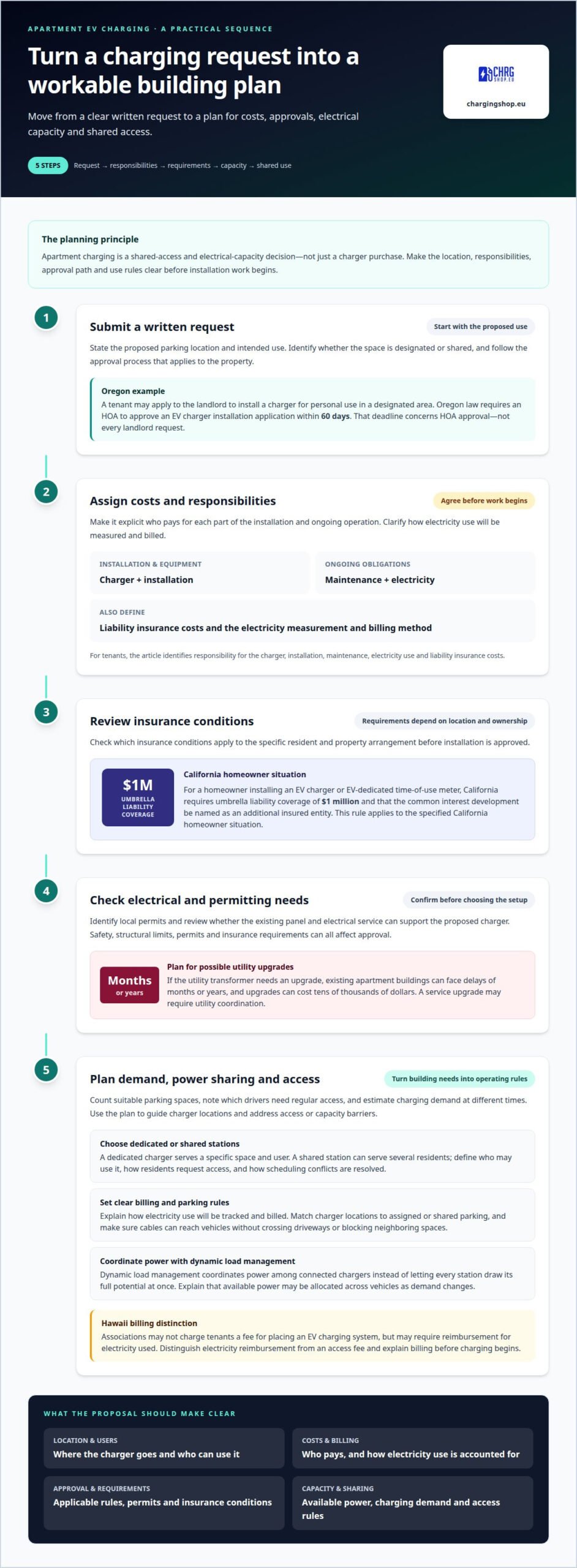
Use these steps to turn a request into a workable plan:
- Submit a written request. In Oregon, a tenant may apply to the landlord to install a charger for personal use in a designated area. State the proposed parking location and intended use. Oregon law requires an HOA to approve an EV charger installation application within 60 days; this deadline concerns HOA approval, not every landlord request.
- Assign installation and operating costs. Tenants are responsible for the charger, installation, maintenance, electricity use, and liability insurance costs. Set out who will pay each cost before work begins, and clarify how electricity use will be measured and billed.
- Review insurance conditions. Requirements vary by location and ownership arrangement. In California, a homeowner installing an EV charger or EV-dedicated time-of-use meter must maintain umbrella liability coverage of $1 million and name the common interest development as an additional insured entity. That rule applies to the specified California homeowner situation.
- Check electrical and permitting needs. Identify local permits for the proposed work. Assess whether the existing panel and service can support the charger; a service upgrade may require utility coordination. Safety, structural limits, permitting, and insurance requirements can affect approval.
- Plan for residents’ demand. Count suitable parking spaces, note which drivers need regular access, and estimate charging demand at different times. Use the resulting plan to guide charger locations and address access or capacity barriers. An EV charging policy for apartments can help communities coordinate installation planning as adoption grows.
What are EV charging stations for multifamily properties?
Plan each station around its users, parking location, and electricity billing method.
Coordinate Access and Billing
Set access and billing rules before residents begin sharing a charging station. Decide whether access is assigned to specific drivers or open to eligible residents, and explain how each person’s electricity use will be tracked and billed. A clear process helps prevent disputes when several drivers need the same charger. For managed station access, CHRG Network Access can support station management.
Arrange Shared or Assigned Parking
Match charger locations to the building’s parking arrangement. An assigned space can make a dedicated station straightforward, while shared parking may call for a charger that several drivers can access. Make sure cables can reach vehicles without crossing driveways or blocking neighboring spaces. If a station is shared, define how residents can access it rather than reserving it for one driver.
- Choose a shared or dedicated setup. A dedicated charger serves a specific space and user. A shared station can serve several residents, but its access and billing process must account for each charging session. Choose an arrangement based on parking availability, residents’ needs, and how the property will manage use. Keep the rules easy to follow.
- Plan for sharing as demand changes. Set out how residents request access, use the station, and resolve scheduling conflicts. If a property has both assigned and shared parking, define which spaces support charging and who may use them. Include those arrangements in the building’s EV charging policy, alongside any planned electrical upgrades. This gives homeowners, tenants, and property managers a consistent basis for coordinating shared use.
Dynamic load management and electrical capacity
Start with the building’s available power, then decide how stations will share it. A defined approach helps property owners plan for rising EV demand without treating every charger as a separate electrical load.
Assess Electrical Capacity
Review the building’s electrical capacity before adding stations. Consider existing demand and how much charging residents may need at the same time. If the utility transformer needs an upgrade, existing apartment buildings can face delays of months or years, and upgrades can cost tens of thousands of dollars. Account for that possibility when comparing plans.
Set Up Power Sharing
Choose a power-sharing approach that fits available capacity and residents’ charging patterns. Dynamic load management coordinates power among connected chargers instead of allowing every station to draw its full potential at once. This can help a shared installation serve more tenants. Explain that power may be allocated across vehicles as demand changes.
- Balance station count with resident use. These examples show why charger count, waiting time, and electricity costs should be considered together.
- Set electricity reimbursement rules. Explain how the property will account for electricity used at shared chargers. Rules vary by jurisdiction: in Hawaii, associations may not charge tenants a fee for placing an EV charging system, but may require reimbursement for electricity used. Distinguish reimbursement from an access fee, and explain billing before tenants begin charging. Clear terms help residents and property owners manage shared use.
- Keep public charging in perspective. Nearby public stations can complement home charging when building capacity limits convenient access. They don’t replace planning for the property’s electrical service, charger allocation, or electricity reimbursement. Treat public stations as one part of the plan, particularly as demand grows.
Renters’ and condominium owners’ charging rights
Identify the federal, state, and local requirements that apply to safety, permits, building conditions, and parking. Right-to-charge laws provide specific protections, but the rules depend on location and housing type.
Identify Applicable Charging Rules
Start with the state and local rules for the property’s location. California Civil Code sections 4745, 4745.1, and 6713 address EV chargers and EV-dedicated time-of-use meters in multifamily housing. Local ordinances, permitting requirements, assigned parking, and shared-area rules can also affect a proposed installation. Separate these approval conditions from a resident’s legal right to request charging infrastructure.
Review Renter Right-to-Charge Protections
Check whether your state’s protections cover renters and your type of building. California and Colorado have right-to-charge laws that also apply to rental buildings. Illinois gives tenants in new buildings the right to install chargers without unreasonable restrictions from landlords and homeowners associations. These protections don’t remove applicable safety, permitting, or cost requirements. Public charging can be an alternative while a request is under consideration.
Review Condominium Owner Charging Rights
For an assigned condo space, identify protections for owners before submitting an installation application. In California, a common interest development may not prohibit or restrict installation or use of an EV charger in a homeowner’s designated parking space or unit. Restrictions also may not significantly increase costs or reduce efficiency or performance. If installation there isn’t possible, California homeowners may seek authorization to use a common-area location.
- Apply the rule to Virginia. Virginia and eight other states enacted right-to-charge laws in 2020. Across the United States, 15 states have passed such laws, but protections and conditions vary. Match the law to your status as a renter or owner, the parking space, and the installation location. Then submit the request through the property’s applicable approval process.
Plan your apartment charging setup around your property’s access and infrastructure needs.
Charging Shop
Charging Shop helps connect your apartment charging plan with suitable charging hardware and a tailored offer. Once access, parking, billing, and electrical capacity are clear, its Personalised Charging Offer can help align equipment choices with your project’s requirements.
The range includes the V2C Trydan 22kW, V2C DENKA 20kW DC Wallbox, and Alfen Single Pro Line 22kW. These options give property owners and residents hardware choices to consider as they plan a dedicated or shared charging setup. Focus on the building’s needs, rather than choosing a charger before its access and power arrangements are defined.
When your charging plan is ready for equipment selection, contact Charging Shop.
Make the Charging Plan Ready to Adapt
Treat an EV charging policy for apartments as an ongoing operating plan, not a one-time approval. As residents and charging needs change, keep the process clear for new tenants, owners, and property managers. A simple record of decisions, responsibilities, and shared-use arrangements helps the building apply its policy consistently.
Choose a next step that fits your role. Residents can prepare a specific request for their property manager. Building decision-makers can turn agreed access and operating rules into a practical plan for future charging needs, often discussing policy changes during community meetings. For condo boards and property associations hosting hybrid resident meetings or AGM presentations to review infrastructure upgrades, technical production support from Straight Street Event Services can ensure seamless audiovisual delivery. Focus the policy on how the building will manage charging, rather than on one resident’s current setup.
When you’re ready to discuss charging options for your apartment project, contact Charging Shop to discuss options. Take the next step with a clear plan and move your building toward charging that works for its community.
Frequently Asked Questions
Can you own an EV if you live in an apartment?
Yes. Apartment living doesn’t prevent EV ownership, but it can affect where and how you charge. Options include an available standard outlet, an approved Level 2 charger, a building station, workplace charging, or nearby public charging. Choose a plan that fits your parking access and daily routine. Don’t use an extension cord for Level 1 charging, as it can create safety hazards.
Do condo owners need HOA approval for EV charger installation?
Approval requirements depend on state law, association rules, and the proposed location. In California, a common interest development may not prohibit or restrict a charger in an owner’s designated parking space or unit, subject to applicable requirements. Common-area installations can require authorization. In Oregon, an HOA must approve an EV charger installation application within 60 days.
Do U.S. states have right-to-charge laws for apartment tenants or condo owners?
Yes. The research facts report that 15 U.S. states have passed Right-to-Charge laws, with protections varying by state and housing type. California and Colorado laws also apply to rental buildings. Virginia and eight other states enacted right-to-charge laws in 2020. These laws can protect installation requests, but conditions may address safety, permits, costs, and parking.
Who pays for EV chargers, installation, electricity, and maintenance in apartments?
Under the tenant installation arrangement described for Oregon, the tenant is responsible for the charger, installation, maintenance, electricity use, and liability insurance costs. Shared installations may have different arrangements set by the property. For example, a building could establish how users share common charging costs. Put responsibility for equipment, upkeep, and electricity in the building’s written charging terms.
How much does it cost to install Level 2 EV charging in an apartment parking lot?
There isn’t one reliable cost for every parking lot. The project depends on whether a suitable 240-volt outlet exists, electrical capacity, wiring distance, permits, and whether utility service needs an upgrade. Multiple stations or complex cable routes can change the work required. Assess the site and electrical plan first, then base the project budget on those specific requirements.
How can landlords allocate charging costs and bill residents for electricity?
Landlords can set a clear billing method based on each resident’s measured charging use. Station-level energy records, for example, can help distinguish one driver’s consumption from another’s. Explain how usage is recorded, how residents are billed, and how shared stations are managed when several tenants charge. In Hawaii, associations may require reimbursement for electricity used, but may not charge tenants a fee for placing an EV charging system.
