
 Deutsch
 Dansk
 Suomi
 Latviešu
 Lietuvių
 Norsk bokmål
 polski
 Русский
 Svenska

No products in the cart.
Uncategorized
EV Fleet Management Charging Solutions for Lower Fleet Costs
18
Nov
Nov
The best EV fleet management charging solutions aren’t always the fastest chargers. Match equipment to vehicle schedules: Level 2 charging can cover predictable overnight demand, while DC fast charging can support time-sensitive routes and peak needs.
Charging speed is only one part of the cost equation. Fleet size, daily mileage, parking time, energy demand, and site capacity all shape the right setup. Managed charging can coordinate charging with fleet requirements and grid capacity, while scheduling sessions during off-peak hours may help reduce operating costs.
See how charger types, schedules, incentives, and networked systems affect fleet efficiency. This guide covers what to consider when selecting EVSE, how a hybrid charging strategy can work, and where managed systems fit. Use it to identify a setup that supports your routes now and can adapt as fleet needs change.
Key Takeaways
- Match charger type to vehicle duty cycles and parking windows to balance turnaround needs with operating costs.
- Build depot schedules around route departures, charging demand, and available electrical capacity.
- Explore applicable incentives alongside fuel and maintenance savings when assessing fleet electrification.
- Use managed charging to coordinate energy demand and gain clearer insight into fleet charging patterns.
How does EV fleet charging impact operational efficiency and cost?
Charging infrastructure affects vehicle availability, energy costs, and route planning. The right system balances fleet schedules and charging speed with site capacity and available incentives.
Availability and Reliability
Reliable charging keeps vehicles ready for assigned routes and helps avoid delays caused by unavailable ports. Map each vehicle’s duty cycle, charging location, and parking time, then compare those needs with depot capacity and public charging access. Public hubs can support vehicles that cannot return to the depot. Network coverage, charger uptime, and hardware compatibility all affect how dependable that backup will be.
Infrastructure Sizing and Deployment
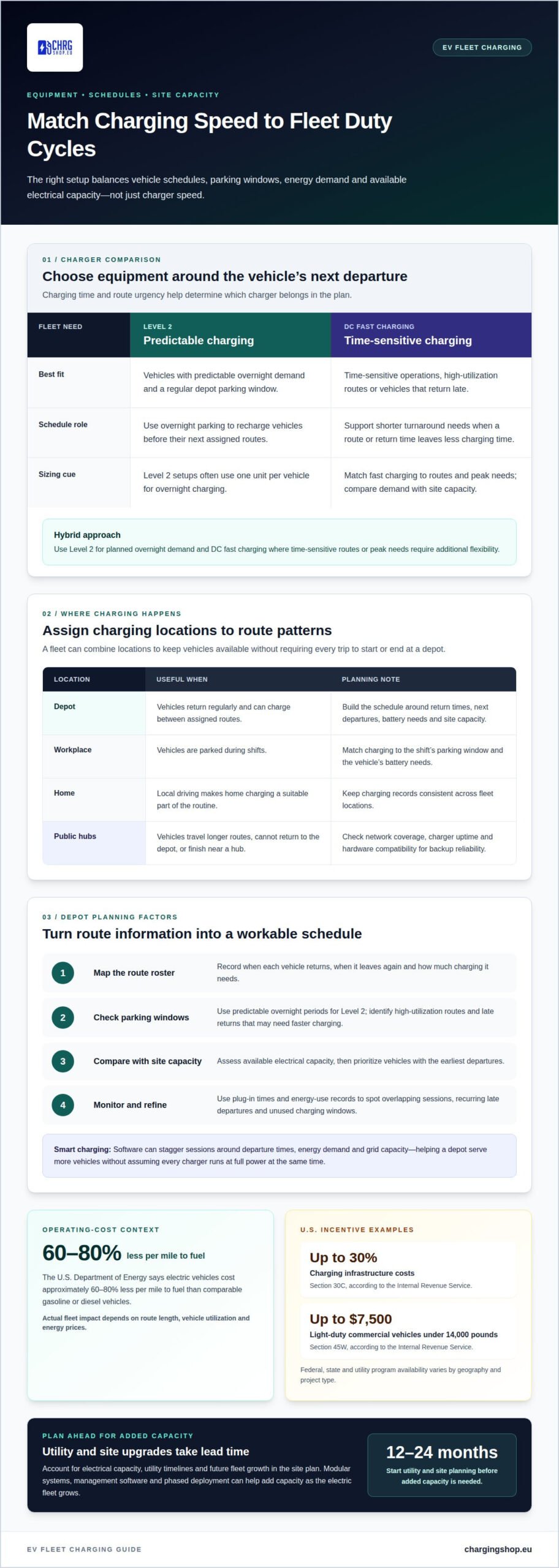
Charger count and capacity depend on fleet size, battery needs, duty cycles, and the time vehicles spend parked. Level 2 equipment can serve predictable overnight demand; DC fast charging can support time-sensitive operations. One planning approach is to inventory vehicles and routes, map charging windows, assess site electrical capacity, then match equipment to demand. Level 2 setups often use one unit per vehicle for overnight charging.
Compare charging providers by pricing structure, network coverage, hardware compatibility, and software tools. The right fit is the one that supports your routes and charging windows.
Scaling for Fleet Growth
Plan infrastructure for both your current vehicles and future fleet needs. Modular systems, charging management software, and phased deployment can help you add capacity as the electric fleet grows. Account for electrical capacity, utility timelines, and expansion needs in the site plan. Consider locations along busy routes, too, so fleet vehicles can charge without every trip starting or ending at a depot.
Infrastructure Management, Benefits, and Costs
A charging-point management system can connect stations with fleet operations, allocate charging based on energy demand and grid capacity, and reveal patterns in energy use. Scheduled charging during non-peak hours can help manage operating costs. The U.S. Alternative Fuel Refueling Property Credit under Section 30C covers up to 30% of charging infrastructure costs, according to the Internal Revenue Service. For fuel-cost context, the U.S. Department of Energy says electric vehicles cost approximately 60-80% less per mile to fuel than comparable gasoline or diesel vehicles. Consider equipment, site capacity, energy use, and management needs together when assessing the transition.
Charging schedule and depot charging optimization
Build a practical charging schedule around routes, vehicle return times, and battery requirements. Coordinate depot charging with workplace, home, and public options to keep vehicles available.
Depot Charging Schedules
Build each depot schedule around departure times, battery needs, and parking windows. Start with a route roster: record when each vehicle returns, when it leaves again, and how much charging it needs. Level 2 charging suits predictable overnight parking; DC fast charging can cover high-utilization routes or late returns. Compare demand with available electrical capacity, then prioritize vehicles with the earliest departures. Monitoring plug-in times and energy use helps refine the schedule as fleet electrification progresses.
Charging Across Fleet Locations
Use depot charging for vehicles that return regularly, workplace charging for vehicles parked during shifts, and home charging for local driving. Public hubs can support vehicles on longer routes or trips that bypass the depot. Match each option to route patterns, parking time, and battery needs. For example, a vehicle ending its route near a public hub may recharge there instead of making an empty return to the depot. Consistent charging records improve visibility across locations and clarify energy use and responsibility for charging costs.
Smart Charging and Depot Capacity
Smart charging software can stagger sessions around departure times, energy demand, and grid capacity. That coordination can help a depot serve more vehicles with its available electrical supply, without treating every charger as though it must run at full power simultaneously. Use monitoring data to spot overlapping sessions, recurring late departures, and unused charging windows. AI tools can also help predict demand and optimize schedules based on driving patterns. Start utility and site planning 12-24 months before added capacity is needed, since upgrades can take time. For a schedule tailored to fleet requirements, consider a Personalised Charging Offer.
Government incentives and operational savings
Common electrification risks include charging gaps, limited site capacity, route mismatches, and unexpected maintenance. Reduce downtime by aligning charging schedules with departures, monitoring battery status, and using vehicle diagnostics to flag maintenance needs early.
Incentives can change the economics of vehicle purchases and charging infrastructure. The Internal Revenue Service says the U.S. Commercial Clean Vehicle Credit under Section 45W offers up to $7,500 for light-duty vehicles under 14,000 pounds. Federal, state, and utility programs may also support charging infrastructure, with availability varying by geography and project type. Build incentive eligibility into project planning, then assess vehicle and infrastructure investments separately.
Operational savings depend on how vehicles are used, where they charge, and what they replace. The U.S. Department of Energy says electric vehicles cost approximately 60-80% less per mile to fuel than comparable gasoline or diesel vehicles. Route length, vehicle utilization, and energy prices influence the impact on fleet budgets. Compare expected energy use with existing fuel spending, while including charging equipment and site capacity in the transition plan.
Maintenance planning also affects uptime. EV fleet managers can use telematics data on battery status, charging levels, and vehicle diagnostics to support proactive maintenance. AI and machine learning can help predict maintenance needs, optimize charging schedules, and account for individual driving behavior. For example, a vehicle showing changing battery or diagnostic patterns can be scheduled for attention before its next demanding route. This approach connects daily operations with sustainability goals while helping managers allocate vehicles effectively.
Assess efficiency by tracking charging sessions, energy use, route completion, and maintenance events together. Compare results with vehicle duty cycles and operating costs, then adjust schedules or deployment plans. This gives fleet teams a practical basis for decisions, rather than judging electrification by vehicle purchase costs alone.
Managed charging and networked systems
Managed charging connects charger activity with fleet needs, energy demand, and grid capacity. Effective EV fleet management charging solutions coordinate sessions across the fleet instead of treating each one in isolation.
Managed Charging Controls
A charging management system can dynamically allocate charging resources based on fleet requirements, energy demand, and grid capacity. It can prioritize vehicles needed for imminent deliveries while scheduling other sessions around available charging windows. Fleet operators can use system analytics to review charging patterns, energy consumption, and overall performance. These insights help identify recurring demand peaks, improve planning, and align fleet operations with actual charging activity.
Networked Charging Systems
Networked chargers communicate with management software, giving operators a shared view of charging sessions and station activity. A charging point management system can provide real-time communication between stations and a fleet management system. Protocol compatibility matters when equipment and software come from different manufacturers. OCPP 2.0.1 enables software to communicate with chargers from different manufacturers, while equipment supporting OCPP version 1.6 or higher can support switching charging networks. Review how those capabilities fit your fleet systems and network plans.
Telematics and Charging Management Integration
Vehicle telematics and charging management systems combine vehicle data with communication from charging stations. Telematics can provide battery status, charging levels, and vehicle diagnostics; charging management can use fleet requirements and grid capacity to coordinate sessions. Together, these inputs help managers identify which vehicles need energy first and align charging availability with routes and delivery plans. For example, a vehicle assigned to a demanding upcoming route can take priority over one parked for longer. Well-designed EV fleet management charging solutions turn connected data into clearer charging decisions and better visibility for drivers and operations teams.
To add network access to your charging plans, explore CHRG Network Access.
Charging Shop
Charging Shop helps fleet operators connect charging requirements with suitable equipment and a personalised offer. Turn to it when you’re assessing charger options for depot schedules, route demand, or a growing electric fleet. The available range includes the V2C Trydan 22kW, V2C DENKA 20kW DC Wallbox, and Alfen Single Pro Line 22kW. Each option gives you a starting point for considering how charging equipment fits your fleet’s operating needs.
Describe the charging scenario you’re planning, whether that means predictable depot charging or faster turnaround. A Personalised Charging Offer can help frame your equipment decision around those needs. Contact Charging Shop to discuss charging options for your fleet.
Build a Charging Plan That Can Move With Your Fleet
Use your next procurement decision to define how charging should support your fleet’s operating model. Set priorities for vehicle assignments, depot requirements, network access, and expected route changes. A clear plan connects equipment choices to daily operations instead of treating each charger as a separate purchase. Revisit those priorities before expanding the system as your needs evolve.
Charging Shop offers the V2C Trydan 22kW, V2C DENKA 20kW DC Wallbox, and Alfen Single Pro Line 22kW. These options give fleet operators equipment choices to consider alongside a Personalised Charging Offer. The right direction depends on how your vehicles operate and where charging fits into fleet plans.
Choose ev fleet management charging solutions with the next stage of fleet growth in mind. Start a conversation about the charging setup you’re planning and the equipment that may suit it. Contact Charging Shop to explore your options and take the next step with confidence.
Frequently Asked Questions
What is the best Electric Vehicle Supply Equipment (EVSE) for fleets?
The best EVSE is the one that matches vehicle charging needs, operating schedules, and site capacity. Predictable overnight charging and rapid route turnaround can call for different equipment. Fleet options include the V2C Trydan 22kW, V2C DENKA 20kW DC Wallbox, and Alfen Single Pro Line 22kW. Compare the charging requirements of your vehicles with each option before choosing.
What are the financial benefits of switching to electric fleet management?
Electric fleet management can reduce fuel and maintenance spending while making energy use easier to monitor. Build a cost comparison around vehicle use, charging access, maintenance needs, and applicable incentives. Consider how routes and charging locations affect energy demand, then compare operating expenses with those of the vehicles being replaced. This gives you a more complete ownership picture than focusing on purchase costs alone.
What charging options are available for fleets moving to electric vehicles?
Fleet charging can combine depot, workplace, home, and public charging. Small-company fleets can use RFID authentication for company charging, while public charging can involve app access and a management system. Choose access methods that make it easy for drivers to start sessions and help fleet teams track charging activity. Different locations can serve different routes and parking patterns.
What factors determine whether EV fleet vehicles are a good fit for my operations?
EV suitability depends on route distance, vehicle use, parking windows, and charging access. Start by mapping actual routes and shift patterns, then identify when vehicles can be plugged in. A vehicle that reliably returns to a depot has different needs from one covering long routes or irregular shifts. Consider whether charging locations fit the fleet’s operating sites and daily work.
What is an EV fleet?
An EV fleet is a group of electric vehicles an organization uses for its operations. It may include company cars, service vehicles, delivery vehicles, or other work vehicles. Vehicles can charge at a depot, workplace, home, or public station. Fleet management coordinates vehicle use and charging so vehicles are assigned to suitable tasks and available when needed.
What is EV fleet management software and what features does it offer?
EV fleet management software helps coordinate vehicle use and charging. A charging-point management system can communicate with stations and fleet systems, allocate charging resources, and provide analytics on charging patterns and energy consumption. Telematics can add battery status, charging levels, and vehicle diagnostics. Together, these tools help managers review operations and make informed decisions about charging and vehicle availability.
