
 Deutsch
 Dansk
Dansk Suomi
Suomi Latviešu
 Lietuvių
 Norsk bokmål
 polski
 Русский
 Svenska
No products in the cart.
Uncategorized
EV Charging for Company Cars: Practical 2026 Buying Guide
02
Oct
Oct
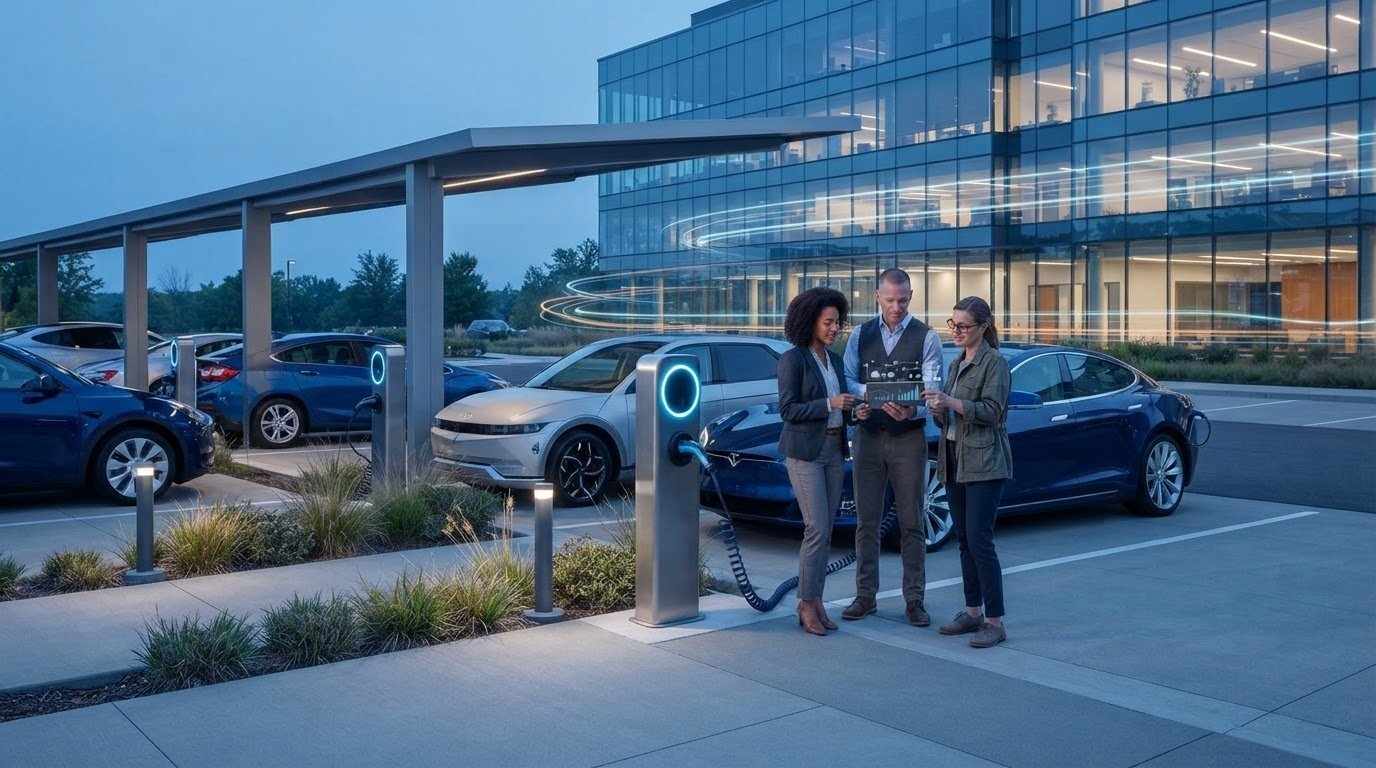
What if the best company-car charging plan starts with fewer chargers, not more? For ev charging for company cars, begin with when each vehicle returns, how long it stays parked and how much energy it needs before its next trip. A fleet that charges overnight has different requirements from cars that turn around between shifts. Map those routines first to estimate capacity without overbuilding your site.
Charger count is only part of the decision. You also need hardware suited to your vehicles and site capacity, plus a practical way to coordinate access and review usage. This guide explains how to match charging capacity to fleet routines, compare AC and DC hardware, and consider CHRG Network access as part of a management plan. Use the steps below to build a focused equipment shortlist around your operating needs.
Key Takeaways
- Build your ev charging for company cars plan around vehicle schedules, parking time and daily mileage before deciding how many chargers you need.
- Compare AC and DC charging based on how long vehicles stay parked, then match charger capability to each vehicle and the site.
- Choose between dedicated and shared charging setups by considering access, vehicle allocation and how you’ll track usage and reimbursement.
- Use a five-step planning process: map vehicles, estimate demand, assess site capacity, compare hardware and plan management.
- Assess options such as the V2C Trydan, V2C DENKA, Alfen Single Pro Line and ABB Terra AC against your fleet’s requirements, and include CHRG Network access in your management assessment.
Why EV Charging for Company Cars Starts with Your Fleet’s Daily Routine
Company-car charging is infrastructure planned around business-owned or assigned vehicles, their schedules and the capacity of the sites where they park. For ev charging for company cars, start by understanding when vehicles are available and how much energy they need before choosing chargers.
Predictable return times make demand easier to plan. Cars parked overnight may have a long charging window, while vehicles returning late or leaving early have less flexibility. A fleet with frequent dispatches may need a different setup from one where cars stay at the workplace for much of the day.
Keep fleet charging distinct from public charging and employee charging benefits. Public units serve drivers who need access while travelling. An employee amenity program supports personal convenience. A company-car setup has a more direct operational goal: prepare assigned vehicles for their next work journey. For a foundation on charging-station technology, see this overview of the electric vehicle charging station.
Which company-car charging needs should you map first?
Start with the vehicles and their routines, not a target charger count. Sketch a typical week, then note the days and times when several vehicles need energy at once.
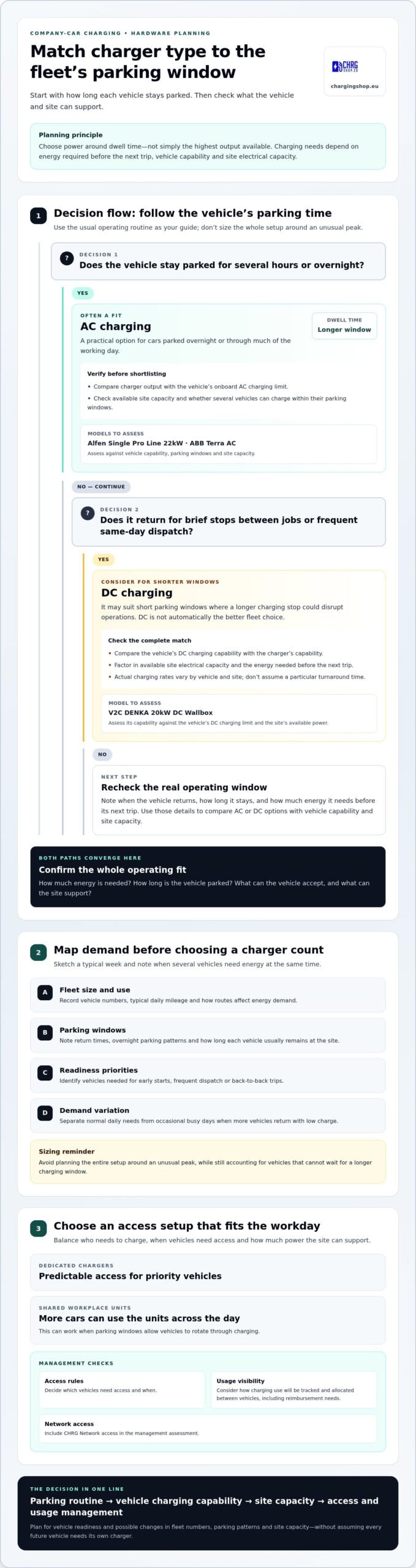
- Fleet size and use: Record the number of vehicles, typical daily mileage and how routes affect energy demand.
- Parking windows: Note return times, overnight parking patterns and how long each vehicle usually stays at the site.
- Readiness priorities: Identify cars needed for early starts, frequent dispatch or back-to-back trips.
- Demand variation: Separate normal daily needs from occasional busy days when more vehicles return with low charge.
This distinction helps you avoid sizing the whole setup around an unusual peak while still planning for vehicles that cannot wait for a longer charging window.
What business outcomes should the charging setup support?
Make vehicle readiness the first measure of success. The setup should fit the fleet’s operating routine, so drivers know where to charge and vehicles are prepared for planned journeys. Then define what the business needs to manage: energy-use visibility, access rules and clear allocation of charging between vehicles.
Plan for growth without assuming every future vehicle needs its own charger. Consider how fleet numbers, parking patterns and site capacity could change. This gives you a basis for comparing hardware and management options against real operating needs, rather than choosing equipment based on a fixed count alone.
AC or DC Charging for Company Cars: Match Power to Vehicle Dwell Time
Choose charging power around how long each car is parked, not the highest output available. AC charging often fits vehicles left at a depot or office for several hours or overnight. DC charging may suit short parking windows and frequent dispatch, but it isn’t automatically the better fleet choice. The right option depends on vehicle charging capability, site electrical capacity and the energy needed before the next trip.
The U.S. Department of Energy’s federal guidance on workplace charging also covers charging levels and access planning. Use dwell time as your starting point, then assess hardware against your fleet and site.
| Use case | Typical dwell time | Hardware category | Planning considerations |
|---|---|---|---|
| Cars parked overnight | Several hours | AC charging | Compare charger output with the vehicle’s onboard AC charging limit and available site capacity. |
| Cars parked through much of the working day | Extended daytime stop | AC charging | Check how many vehicles can charge within their parking windows and whether site demand needs managing. |
| Vehicles returning for brief stops between jobs | Short turnaround | DC charging | Compare the vehicle’s DC charging capability with the charger and site power available. |
When does AC charging fit a company-car fleet?
AC is a practical fit when cars stay parked for a substantial part of the day or overnight. Check each vehicle’s onboard AC charging limit: a higher-output charger won’t make a car charge beyond what its onboard system accepts. Assess the Alfen Single Pro Line 22kW and ABB Terra AC against vehicle capability, parking windows and site capacity.
When should a business consider DC charging?
Consider DC for vehicles with short parking windows or frequent same-day dispatch, where a longer charging stop may disrupt operations. The V2C DENKA 20kW DC Wallbox is an option to assess for this use case. Match its capability to the vehicle’s DC charging limit, then factor in the site’s available electrical capacity and how charging fits the working day. Actual charging rates vary by vehicle and site, so don’t assume a particular turnaround time.
For ev charging for company cars, compare the full operating picture: how much charge is needed, how long each car is parked and what the site can support. A personalised charging offer can help you frame hardware choices around those requirements. Explore company-car charging options as you build your shortlist.
Compare Company-Car Charging Setups by Access, Capacity and Management
The right setup balances who can charge, when vehicles need access and how much power the site can support. Dedicated chargers offer predictable access for priority vehicles. Shared workplace units can serve more cars across the day if parking windows allow rotation. Adding network access brings another management consideration: how charging access and usage fit the business’s workflow. Explore the CHRG Network management guide for more on network access.
Don’t calculate charger count from fleet size alone. Map arrival times, parking duration and how often vehicles need charging at once. A fleet where most cars return overnight has a different demand pattern from one with frequent daytime returns. Research on EV charging behavior can also inform planning around how people use shared charging points in practice.
Should company cars use dedicated or shared charging points?
Dedicated access can suit vehicles with predictable assignments or priority dispatch, where the same car needs to be ready for a specific routine. Shared points can work when arrival times and parking periods leave room for vehicles to rotate. Set written rules covering who gets priority, when drivers should move vehicles and how charging access is allocated. Clear expectations reduce scheduling friction.
What should you compare in charging management?
Start with what the business needs to manage, then assess how charger hardware and network access fit those requirements. Check that the functions you need are supported by the selected equipment and network.
- Access: Decide who can use each charger and whether priority vehicles need reserved access.
- Allocation: Define how charging is assigned when several vehicles need power at the same time.
- Usage records: Identify what charging information you need to review for operations or reimbursement.
- Reporting workflow: Consider who reviews usage and how the information supports business processes.
Reimbursement needs matter when employees charge company vehicles at different locations or under different arrangements. Establish what records the business needs before selecting a management approach, and distinguish fleet charging from personal use where relevant. The goal is useful visibility and clear accountability, not collecting data the business won’t use.
For ev charging for company cars, compare dedicated, shared and network-access setups against the same checklist: vehicle availability, site capacity, access rules and required usage visibility. This makes it easier to choose a setup that supports real fleet routines and can adapt as they change.
Plan EV Charging for Company Cars in Five Practical Steps
A practical plan turns fleet routines into clear requirements for equipment and management. Work through these five steps before selecting hardware. This keeps vehicle needs, site capacity and potential changes in view without assuming a fixed charger count.
- 1. Map the vehicles. Record each vehicle’s typical daily mileage, return time, departure time and parking location. Flag cars that need to be ready for early starts or frequent dispatch.
- 2. Estimate charging demand. Group vehicles by daily distance, parking window and required departure readiness. Look for periods when several cars need charging at once, rather than treating the entire fleet as if it returns together.
- 3. Assess site capacity. Document the site’s existing electrical capacity and parking layout. Treat these as planning inputs, not as a reason to assume a particular upgrade. Note where vehicles park and how charging access needs to work.
- 4. Compare hardware. Check vehicle connectors and AC or DC charging capabilities, including each vehicle’s charging limits. Compare equipment against those limits, dwell times and site capacity, not headline output alone.
- 5. Plan management. Set out how drivers access chargers, how vehicles are allocated during busy periods and what usage records the business needs. Keep the approach flexible enough to reflect changes in fleet size or work patterns.
How do you estimate charging demand without overbuilding?
Group vehicles by real operating patterns. A vehicle covering longer daily distances may need more energy than one used locally, while a car returning late has less time to charge before departure. Compare these needs with parking windows and identify periods of simultaneous demand. Review the assumptions when routes, vehicle numbers or schedules change, so the plan stays aligned with actual use.
What should a company confirm before choosing hardware?
Bring the vehicle and site details together in one shortlist: connector type, onboard AC and DC charging capability, daily mileage, parking layout, available electrical capacity and access requirements. Then compare hardware against the fleet’s operating needs. Equipment selection is one decision; deployment planning is a separate stage informed by the chosen setup and site requirements.
Use this framework to shape a fleet-specific shortlist, then explore a personalised charging offer for hardware options suited to your requirements.
Choose Company-Car Charging Hardware and Network Access That Fit Your Plan
Your shortlist should reflect the decisions made so far: AC or DC charging, vehicle charging limits, site capacity, parking routines and who needs access. For ev charging for company cars, compare options against those requirements rather than choosing by charger output alone. Product names are a starting point for assessment, not a substitute for checking vehicle and site details.
Which Charging Shop hardware belongs on your shortlist?
For fleets with longer parking windows, assess AC options such as the V2C Trydan 22kW and Alfen Single Pro Line 22kW. Review the Alfen Single Pro Line 22kW review as part of your AC hardware comparison. Consider the ABB Terra AC against the same checklist: vehicle compatibility, site capacity and how the charger fits your operating routine.
If short turnarounds make DC worth evaluating, include the V2C DENKA 20kW DC Wallbox as an option, then compare it with vehicle capability and available site power. The 40kW DC wallbox guide offers additional business-charging context. Its subject is a different power category, so use it for broader comparison, not as a specification for the DENKA.
When does CHRG Network access enter the buying decision?
Include network access when defining how the business wants to manage charging. First, write down the visibility, access arrangements and usage workflows you need. Then assess how CHRG Network access and the shortlisted hardware fit those requirements. Make sure the functions you need are supported by the options selected and the business’s operating process.
Make the final comparison practical. Can the selected charging approach support vehicle readiness? Does it fit the site’s capacity and the fleet’s parking patterns? Will its access and management arrangements work for the people responsible for charging? Answer those questions before settling on equipment.
Once your requirements are clear, explore Charging Shop’s charging solutions and build a shortlist around your fleet and site.
Build a Charging Plan That’s Ready to Grow
A reliable approach to ev charging for company cars starts with fleet routines, not a preset charger count. Map vehicle mileage, parking windows and departure needs, then compare those patterns with site capacity and each vehicle’s charging capability.
AC hardware can suit cars parked for longer periods, while DC options may be worth evaluating for shorter turnaround windows. Access rules, usage visibility and management workflows also shape the final choice. Define these requirements before selecting equipment, then revisit the plan as fleet numbers or operating patterns change.
Charging Shop offers AC and DC hardware options for different fleet use cases, alongside personalised charging offers and CHRG Network access. Use your requirements to create a focused shortlist, then explore Charging Shop’s EV charging solutions.
You now have a practical framework for a fleet-led choice. Take the next step by exploring Charging Shop’s EV charging solutions and building a charging plan around your business.
Frequently Asked Questions
Is workplace EV charging suitable for company cars?
Yes, workplace charging can suit company cars that regularly return to a business site, especially when they stay parked long enough to recharge before their next trip. Compare vehicle schedules, daily mileage, charging capability and site capacity to see how workplace charging fits your operations. It can support fleet readiness, but the right setup depends on when vehicles are available and how much energy they need.
How many EV chargers does a company car fleet need?
There’s no fixed charger-to-vehicle ratio that fits every fleet. Base the number on how many cars need charging at the same time, how long they stay parked and whether chargers can be shared in rotation. Map typical schedules, then account for busy days when more vehicles need a charge together. This helps avoid sizing solely by fleet count or building around an unusual peak.
Should a business choose AC or DC charging for company cars?
Choose AC when cars have longer parking windows, such as overnight or much of the working day. Consider DC when short turnarounds or frequent dispatch make a shorter charging window important. Before selecting equipment, compare its charging type and output with each vehicle’s charging capability and the site’s available capacity. Neither option guarantees a particular charging time across all vehicles and conditions.
Can employees use chargers assigned to company cars?
Yes, if the business allows it and employee use doesn’t compromise fleet readiness. Set clear rules for access, priority vehicles, charger rotation and when a car should be moved after charging. If personal and business use share equipment, decide how charging sessions will be allocated and what usage records are needed. A clear policy helps prevent conflicts and supports consistent tracking or reimbursement processes.
How much charging capacity does a company need for its EV fleet?
Estimate capacity from vehicle mileage, energy needed between charges, parking windows and how many cars may charge simultaneously. Review each vehicle’s charging limits alongside the site’s existing electrical capacity. Charger output alone doesn’t determine how much power a vehicle can use or how quickly it will charge. Reassess the estimate when fleet size, routes, parking patterns or work schedules change.
What should a company look for in EV charger management?
Focus on practical business needs: who can access chargers, how vehicles are allocated, what usage records are available and whether reporting supports reimbursement or operations. Consider how hardware and network access fit the existing workflow. For ev charging for company cars, include CHRG Network access in that assessment and define the visibility and management requirements the fleet actually needs.
